How to Get Through Customs and Immigration
Quick Answer
Going through customs and immigration for the first time can feel intimidating. Here's exactly what happens, what you need to declare, and how to breeze through it.
The Short Answer
Have your passport ready, know why you're visiting, be honest about what you're bringing in, and don't overthink it. The process takes 10-60 minutes depending on the airport, time of day, and whether you've signed up for expedited programs like Global Entry or Mobile Passport Control.
Immigration vs. Customs: What's the Difference?
People use these terms interchangeably, but they're two separate checkpoints:
- Immigration (passport control): Verifies your identity and your right to enter the country. An officer checks your passport, asks a few questions, and stamps you in.
- Customs: Checks what you're bringing into the country. This is about goods, food, money, and items that might be restricted or taxable.
You go through immigration first, then customs. At many airports, these checkpoints are right next to each other and the whole process feels like one thing. But they're separate steps with different purposes.
Step-by-Step: Entering the United States
Step 1: Fill Out Your Declaration Form
Before you land (or during the flight), you'll need to complete CBP Declaration Form 6059B. Flight attendants hand these out on international flights, or you can complete it digitally using the Mobile Passport Control (MPC) app or CBP One app.
The form asks for basic info: your name, address where you're staying, flight number, countries you've visited, and whether you're bringing in certain items. One form covers an entire family traveling together.
Step 2: Get Off the Plane and Follow the Signs
Follow the signs to "Arrivals," "Immigration," or "Passport Control." Don't stop for the bathroom, a snack, or anything else. Go straight to the immigration line. Every minute you delay is another hundred people ahead of you in the queue.
Step 3: Join the Right Line
There are usually separate lines for:
- U.S. Citizens and Permanent Residents
- Visitors / Non-U.S. Citizens
- Global Entry / Trusted Traveler Programs
- Diplomatic / Crew
Get in the correct line. Using the wrong one wastes everyone's time, including yours, since you'll be sent to the back of the right one.
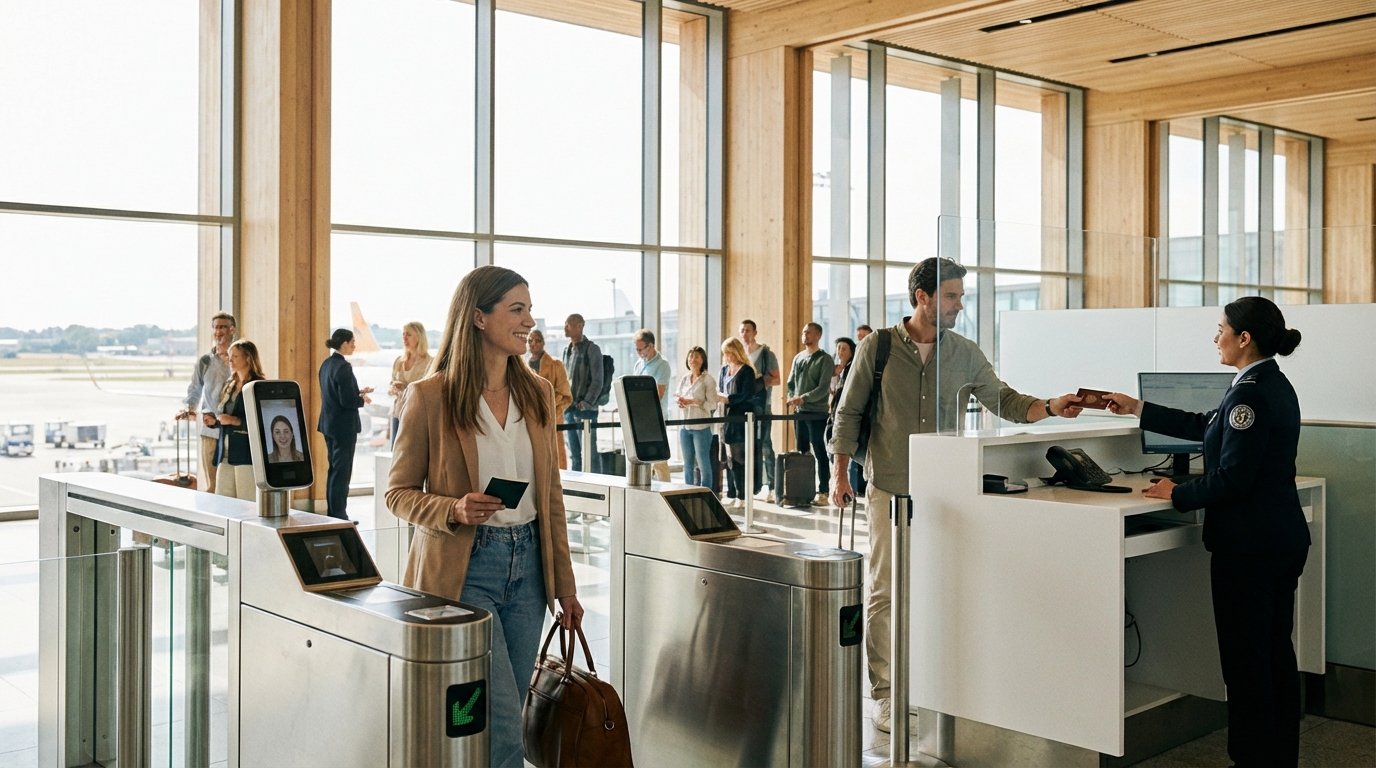
Step 4: The Immigration Officer
When it's your turn, approach the booth. Hand over your passport (and visa documents if applicable). The officer will ask you a few questions. Common ones include:
- "What's the purpose of your visit?" (Tourism, business, visiting family)
- "How long are you staying?"
- "Where are you staying?"
- "Do you have a return ticket?"
Keep your answers short, specific, and honest. "I'm here for a two-week vacation. Staying at a hotel in Manhattan. Flying home on the 15th." That's perfect. Don't ramble, don't make jokes, and don't volunteer extra information.
The officer will take your photo and fingerprints (for non-citizens), then stamp your passport. The whole interaction usually takes 1-3 minutes.
Step 5: Collect Your Bags
After clearing immigration, head to the baggage carousel for your flight. Screens will show which carousel number matches your flight. Grab your checked bags.
Step 6: Walk Through Customs
With your bags and your completed declaration form, walk toward the customs exit. In most cases, you'll hand your form to a CBP officer, who may ask what you're bringing in. Most people get waved through in seconds.
If you're selected for a secondary inspection, stay calm. It's random or triggered by what you declared. They'll look through your bags, ask a few questions, and send you on your way. It's not a big deal.
Step 7: You're In
Walk through the exit doors. If you have a connecting domestic flight, look for signs pointing to "Connecting Flights" or "Transfer." You'll need to re-check your bags at a drop-off point and go through security again.
What Do You Need to Declare?
The customs form asks about specific categories. Here's what you should know:
Always Declare
- Food items: Fruit, vegetables, meat, cheese, seeds, and plants. Some are prohibited entirely. When in doubt, declare it. You won't get in trouble for declaring something that turns out to be fine. You will get in trouble for not declaring something you should have.
- More than $10,000 in cash or monetary instruments: This includes currency, traveler's checks, and money orders. There's no limit on how much you can bring. You just have to declare it.
- Purchases over your duty-free exemption: U.S. residents get an $800 exemption. Anything above that may be subject to duty (tax).
- Alcohol and tobacco beyond the limits: Generally, 1 liter of alcohol and 200 cigarettes are duty-free for adults. More than that needs to be declared.
- Gifts: If the total value exceeds your exemption, declare them with their retail value.
Prohibited Items
- Fresh fruits and vegetables from most countries (agricultural pest risk)
- Meat and meat products from many countries
- Soil or plants with soil
- Counterfeit goods
- Cuban cigars (if you're not coming directly from Cuba)
Throw away any fresh produce before you reach customs. It's not worth the hassle or the potential fine, which can be hundreds of dollars for undeclared food items.
How to Speed Things Up
Mobile Passport Control (MPC)
Download the CBP MPC app (free) before your trip. You scan your passport, take a selfie, answer declaration questions, and submit it all through the app. When you land, you skip the regular line and go to the MPC lane, which is almost always shorter.
MPC is available at 30+ U.S. airports and works for U.S. citizens, U.S. permanent residents, and Canadian visitors. It's free and there's no application process. Just download and go.
Global Entry
Global Entry ($120 for five years) gives you access to automated kiosks at airports. You scan your passport or permanent resident card, place your fingerprints on the scanner, complete the customs declaration electronically, and get a receipt. No lines, no questions from an officer. The whole process takes about 2 minutes.
Global Entry also includes TSA PreCheck, so you get expedited security screening on domestic flights too. If you travel internationally more than once or twice, it's worth every penny.
Applying takes 10-15 minutes online, but you'll need to complete an in-person interview at an enrollment center or do an "Enrollment on Arrival" interview after an international trip. Processing times vary from 2 weeks to several months.
Other Tips to Move Faster
- Sit near the front of the plane. Being first off the aircraft means being first in the immigration line.
- Have your documents organized. Passport, declaration form, visa (if needed), and hotel address all in one accessible place. Don't dig through your bag at the counter.
- Fill out forms in advance. Complete digital declarations before you land using the airline's app or the CBP app.
- Know your hotel address. You'll need it for the declaration form. Have it saved on your phone, not buried in an email you can't access without WiFi.
Entering Other Countries
The process is similar worldwide, but every country has its own quirks:
- European Union: EU citizens use automated gates. Non-EU citizens go to manual passport control. Customs is usually a "nothing to declare" green lane or a "something to declare" red lane.
- United Kingdom: E-gates for UK/EU/US/Australian passports. Others use manual control. Be prepared to show proof of accommodation and a return ticket.
- Australia: One of the strictest customs in the world for food and biological items. Declare everything, even packaged snacks. They use sniffer dogs and heavy fines.
- Japan: Efficient and fast. Fill out the arrival card on the plane. Expect fingerprinting and a photo at the booth.
- Canada: Similar to the U.S. process. You can use ArriveCAN to submit your customs declaration digitally.
What NOT to Do at Customs
- Don't lie. Customs officers are trained to spot it, and the consequences for making a false declaration far outweigh any duty you'd pay on your purchases.
- Don't joke about carrying contraband. "I've got three kilos of... just kidding!" will get you pulled into secondary inspection immediately. Officers take every statement literally.
- Don't use your phone at the counter. Put it away when you're speaking to the officer.
- Don't argue. If you're sent to secondary inspection, cooperate. Getting confrontational only makes things worse and take longer.
- Don't bring prohibited food. That apple from the plane? Toss it before customs. The fine for undeclared agricultural items can be $300 or more on the first offense.
Frequently Asked Questions
How long does it take to get through customs and immigration?
It typically takes 10-60 minutes depending on the airport, time of day, and number of arriving flights. Using Mobile Passport Control or Global Entry can cut this down to 2-5 minutes. Peak times at busy airports like JFK or LAX can take over an hour during heavy arrival periods.
What questions do customs officers ask?
Common questions include: What is the purpose of your visit? How long are you staying? Where are you staying? Do you have a return ticket? Are you bringing in any food, plants, or large amounts of cash? Keep answers short, specific, and honest.
Do I need to declare purchases made abroad?
U.S. residents have an $800 duty-free exemption. If your total purchases exceed that amount, you need to declare them and may owe duty (tax) on the excess. Always declare when asked. Failing to declare items can result in fines and seizure of the goods.
What is the difference between Global Entry and Mobile Passport Control?
Mobile Passport Control is a free app that lets you submit your customs declaration digitally and use a shorter line. Global Entry costs $120 for five years, requires an application and interview, and gives you access to automated kiosks with virtually no wait. Global Entry also includes TSA PreCheck for domestic flights.
Can I bring food through customs?
Some food is allowed, but fresh fruits, vegetables, meat, and soil-bearing plants are generally prohibited when entering the U.S. Packaged, commercially sealed foods are usually fine. When in doubt, declare it on your customs form. You won't be penalized for declaring something that turns out to be permitted.
Written by Aviation Experts
Aviation Professionals
With decades of combined experience in the aviation industry, our team shares insider knowledge to make your travel experience smoother and less stressful.
Was this article helpful?