How to Survive a Long-Haul Flight
Quick Answer
Long-haul flights don't have to be miserable. With the right preparation, gear, and habits, you can step off a 14-hour flight feeling surprisingly functional.
The Short Answer
Wear comfortable layers, stay hydrated, move every couple hours, bring your own entertainment and snacks, and pack a hygiene kit. The key to surviving a long-haul flight isn't toughness. It's preparation.
What Counts as Long-Haul
Generally, anything over 6 hours qualifies as long-haul. But the real endurance test starts around 10 hours. Flights like New York to Tokyo (14 hours), Los Angeles to Sydney (15 hours), or London to Singapore (13 hours) are where your preparation either pays off or falls apart.
The longest commercial flights in the world now push past 18 hours. At that point, you're spending nearly an entire waking day in a pressurized aluminum tube. You need a plan.
Choose Your Seat Strategically
Check in as early as possible and pick your seat with intention. Here's the tradeoff:
- Window seat: Best for sleeping. You have a wall, control the shade, and nobody wakes you up.
- Aisle seat: Best for moving around. You can get up whenever you want without bothering anyone.
- Middle seat: Best for nothing. Avoid it.
On a long-haul flight, I'd argue the aisle seat wins. You need to get up and walk around every couple of hours, and having to climb over sleeping passengers makes that nearly impossible.
Seats over the wing experience the least turbulence. Seats in the last few rows are louder, bumpier, and usually the last to get meal choices.
What to Wear
Leave the jeans at home. Seriously. Stiff waistbands and tight fabrics are torture after hour three. You want soft, stretchy, breathable clothing.
The best approach is layers:
- A comfortable base layer (leggings, joggers, soft t-shirt)
- A warm middle layer (hoodie or lightweight sweater)
- Warm socks (your feet will get cold)
- Slip-on shoes (you'll be taking them off)
Cabin temperatures swing wildly. One hour you're freezing, the next you're sweating under two blankets. Layers let you adjust on the fly.
If you're heading to a meeting right after landing, pack your nice clothes in your carry-on and change in the airport bathroom. Don't suffer through 12 hours in dress shoes.
Pack These Essentials
Your carry-on bag should have a "comfort kit" that you can pull out easily once you're seated:
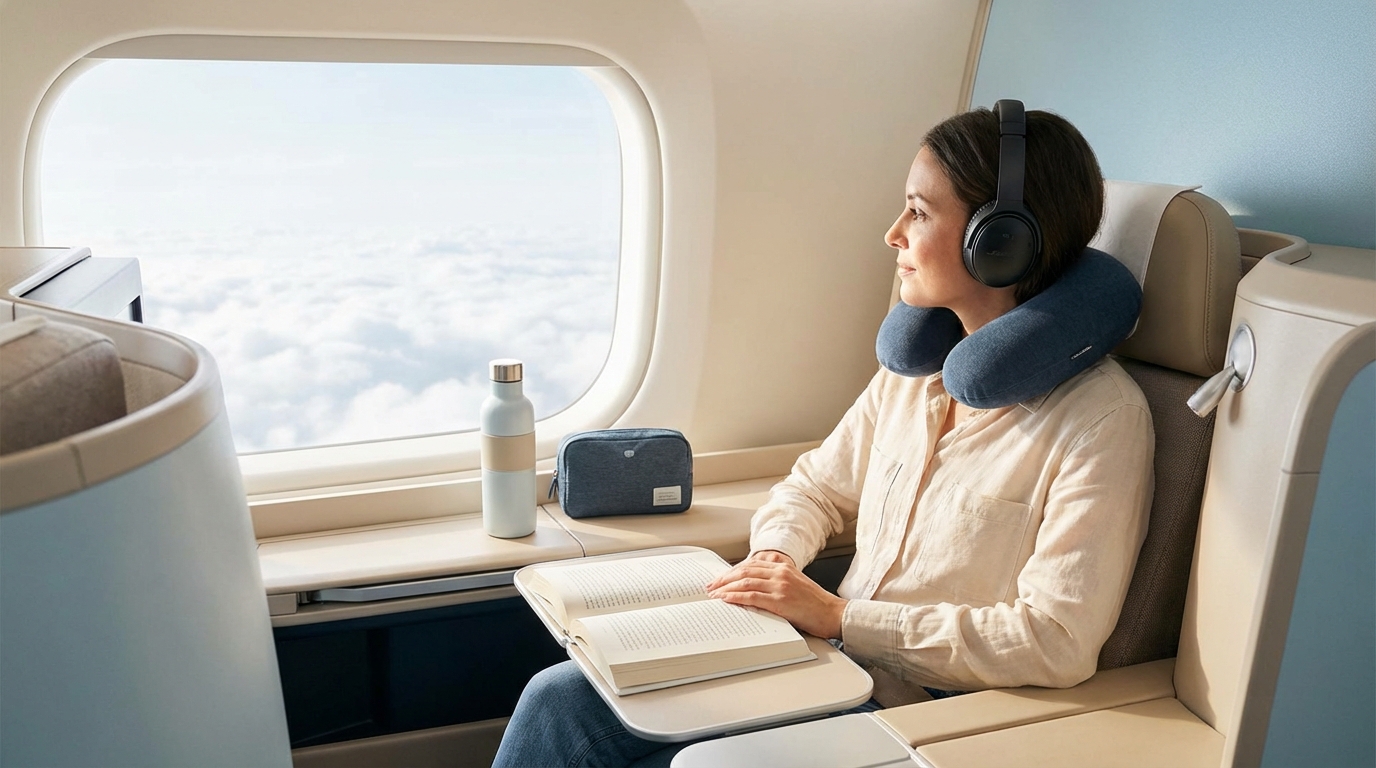
- Eye mask and earplugs: Non-negotiable for sleeping
- Noise-canceling headphones: They kill engine drone and cabin noise
- Travel pillow: Memory foam beats inflatable every time
- Compression socks: These aren't just for older travelers. Clinical studies show they substantially reduce the risk of DVT (deep vein thrombosis) on flights over 4 hours. The gentle pressure keeps blood flowing in your legs.
- Reusable water bottle: Fill it after security and keep sipping
- Moisturizer and lip balm: Cabin humidity drops to around 10-20%, drier than the Sahara
- Snacks: Don't rely solely on airline food
Hygiene Makes a Huge Difference
This is the secret weapon most people overlook. Feeling clean makes a long flight dramatically more bearable.
Pack a small toiletry bag with:
- Travel toothbrush and mini toothpaste
- Facial cleansing wipes
- Deodorant
- Moisturizer
- A comb or brush
About two hours before landing, head to the bathroom and freshen up. Brush your teeth, wash your face, put on moisturizer, run a comb through your hair. You'll feel like a different person. It's a small thing that has an outsized impact on your mental state.
Hydration and Food Strategy
The cabin air is incredibly dry. You're losing moisture through your skin and every breath. Dehydration is the number one reason people feel terrible after long flights.
Drink water constantly. The standard advice is about 8 ounces per hour of flight. Bring your own water bottle and ask flight attendants to fill it. Don't wait for drink service.
Limit alcohol and caffeine. Both are diuretics that accelerate dehydration. One glass of wine at altitude hits like two on the ground. If you want a drink, have one and then match it with two glasses of water.
Bring your own snacks. Airline meals are served on the airline's schedule, not your stomach's. Pack protein bars, nuts, dried fruit, or crackers. When your body says it's dinnertime but the cabin crew hasn't started service yet, having something to eat keeps you comfortable.
Eat lighter than normal. Heavy meals make you bloated and uncomfortable in a pressurized cabin where gas expands. Yes, that's a real thing.
Move Your Body
Sitting motionless for 12 hours isn't just uncomfortable. It's a health risk. Prolonged immobility increases the risk of deep vein thrombosis, where blood clots form in your legs.
Every 2 hours, get up and walk the aisle. Do some calf raises at the back of the plane. Roll your ankles. Stretch your arms overhead. Nobody will look at you funny. Experienced long-haul travelers are all doing the same thing.
In your seat, you can do simple exercises:
- Pump your feet up and down (heel to toe)
- Circle your ankles in both directions
- Tighten and release your leg muscles
- Roll your shoulders forward and backward
Compression socks help too. They apply graduated pressure to your lower legs, improving circulation and reducing swelling. You don't need prescription-grade ones. Over-the-counter compression socks from any pharmacy work fine for most healthy travelers.
Entertainment Planning
Don't count on the seatback screen. Some airlines have great in-flight entertainment. Others have screens from the early 2000s or no screens at all.
Before your flight:
- Download movies and shows on Netflix, Amazon, or Apple TV
- Load up podcasts and audiobooks
- Download music playlists for offline listening
- Bring a book or Kindle (e-readers are lighter than paperbacks)
- Download games on your phone or tablet
Bring a portable charger. Most long-haul aircraft have USB or power outlets, but they're not always working. A dead phone at hour six is a nightmare.
Mix up your activities. Watching six movies back-to-back will leave you feeling brain-dead. Alternate between shows, reading, music, and just sitting with your thoughts. Some of my best thinking happens on long flights with nothing but the window view.
Sleep Strategy
Even if you're not a plane sleeper, getting a few hours of rest on a long-haul flight makes a world of difference. Set yourself up for success: eye mask on, noise cancellation activated, pillow in position, seatbelt visible over the blanket.
Try to sync your sleep with nighttime at your destination. This gives you a head start on beating jet lag when you arrive.
If you absolutely can't sleep, just resting with your eyes closed has real benefits. You don't have to achieve deep sleep to feel better when you land.
The Landing Routine
About 90 minutes before landing, start your "arrival routine." Go to the bathroom and freshen up. Change into clean clothes if needed. Drink water. Eat something light. Fill out any customs or immigration forms.
Set your watch to the local time at your destination (if you haven't already). Start thinking in destination time. When you land, go straight into the local schedule. If it's morning, stay awake. If it's night, go to sleep. Fighting jet lag starts before you step off the plane.
Mental Mindset
Here's something nobody talks about: your attitude matters. If you board a 14-hour flight thinking "this is going to be miserable," it will be. But if you approach it as a block of time to watch movies you've been meaning to see, catch up on podcasts, read a book, or just decompress, it becomes something closer to enjoyable.
Some of the most productive and relaxing hours I've had were on long-haul flights. No email, no phone calls, no obligations for the next 12 hours. That's rare in modern life. Lean into it.
Break the flight into mental segments. The first segment is takeoff to the first meal. Then there's the movie block. Then sleep. Then the pre-landing meal and freshening up. Suddenly a 14-hour flight is just four manageable chunks. It's a lot easier to get through 3-4 hours at a time than to stare down a countdown clock for half a day.
Frequently Asked Questions
How often should I get up and walk on a long-haul flight?
Every 2 hours at minimum. Walking the aisle, doing calf raises, and stretching helps prevent deep vein thrombosis and reduces stiffness. If you can't get up, do ankle circles and foot pumps in your seat.
Do I really need compression socks for a long flight?
Clinical studies show they substantially reduce the risk of DVT on flights over 4 hours. They're especially important if you have risk factors like recent surgery, pregnancy, or circulation issues. But even healthy travelers benefit from reduced leg swelling and improved comfort.
What's the best seat for a long-haul economy flight?
If sleeping is your priority, take the window. If you want to move freely, take the aisle. Either way, choose seats over the wing for less turbulence, and avoid the last few rows which are noisier and bumpier.
Should I eat the airline food on a long flight?
Yes, but supplement with your own snacks. Airline meals are served on their schedule, not yours. Pack protein bars, nuts, or dried fruit to fill the gaps. Eat lighter than normal since cabin pressure makes you feel more bloated.
How much water should I drink on a long flight?
About 8 ounces per hour of flight time. Bring a reusable water bottle, fill it after security, and ask flight attendants for refills during the flight. Don't wait for drink service. Cabin air humidity is around 10-20%, so you're losing moisture much faster than normal.
Written by Aviation Experts
Aviation Professionals
With decades of combined experience in the aviation industry, our team shares insider knowledge to make your travel experience smoother and less stressful.
Was this article helpful?