Can You Bring Batteries on a Plane?
Quick Answer
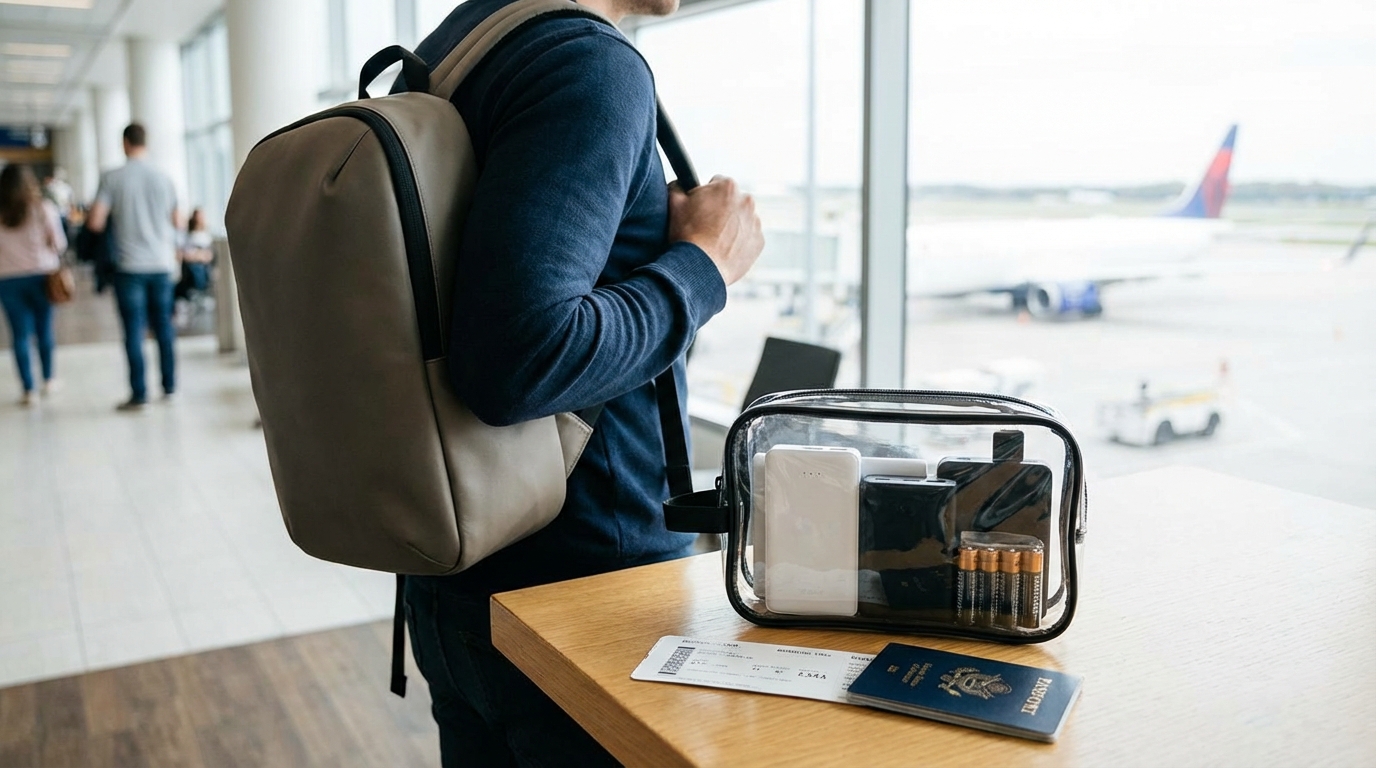
Yes, you can bring batteries on a plane, but the rules depend on the battery type. Regular alkaline batteries (AA, AAA, etc.) have no restrictions. Spare lithium-ion batteries must go in carry-on only and can't exceed 100 watt-hours without airline approval.
Yes, you can bring batteries on a plane. But the rules are different depending on what kind of battery you're talking about. Regular alkaline batteries have zero restrictions. Lithium batteries are heavily regulated. Get the type wrong and you could face confiscation or fines up to $17,062 per violation.
Alkaline Batteries: No Restrictions
Standard AA, AAA, C, D, 9-volt, and button cell batteries are the easy ones. These are your everyday non-rechargeable batteries -- the ones you buy in a multipack at the grocery store.
Alkaline batteries are allowed in both carry-on and checked bags with no quantity limits and no special packaging requirements. Same goes for nickel-metal hydride (NiMH) and nickel-cadmium (NiCd) rechargeable batteries in standard sizes.
One practical tip: put a piece of tape over the terminals of 9-volt batteries before packing them. Those exposed positive and negative posts can short-circuit against coins, keys, or other metal objects. It's a minor risk, but it's happened.
Lithium-Ion Batteries: The Important Rules
Lithium-ion (Li-ion) batteries are the rechargeable batteries inside your phone, laptop, tablet, camera, portable charger, wireless headphones, and just about every other modern electronic device. They're everywhere -- and they're the ones the TSA and FAA care most about.
Here's the breakdown:
Batteries Installed in Devices (100 Wh or Less)
If the lithium-ion battery is installed inside your device -- your laptop, phone, camera, etc. -- and it's rated at 100 watt-hours or less, it's allowed in both carry-on and checked bags.
Most consumer electronics fall well under 100 Wh:
- Smartphone battery: ~10-15 Wh
- Laptop battery: ~50-70 Wh
- Tablet battery: ~25-40 Wh
- Camera battery: ~5-15 Wh
- Wireless headphones: ~1-3 Wh
You don't need to do anything special. Just pack them normally.
Spare Lithium Batteries (100 Wh or Less)
Here's where the critical rule kicks in: spare (uninstalled) lithium batteries must be carried in your carry-on bag. They're banned from checked luggage.
This includes:
- Power banks / portable chargers
- Extra camera batteries
- Spare laptop batteries
- Phone battery cases
- Any loose lithium battery not installed in a device
You must also protect the terminals from short circuit. Here's how:
- Keep batteries in their original retail packaging
- Tape over the terminals with electrical tape or masking tape
- Place each battery in its own plastic bag or protective case
- Use a battery organizer or case
Don't just throw loose batteries in your bag with coins, keys, and other metal. A short circuit can cause a lithium battery to overheat and catch fire.
Larger Batteries (101-160 Wh)
Batteries between 101 and 160 watt-hours require airline approval and are limited to two spare batteries per passenger in carry-on. These bigger batteries are found in some professional cameras, larger power tools, and high-capacity power banks.
You need to contact your airline before flying with batteries in this range. Most airlines will approve them, but they want to know about them in advance.
Batteries Over 160 Wh
Batteries exceeding 160 watt-hours are completely banned from passenger aircraft -- carry-on and checked. These are typically found in electric vehicles, large power stations, and some professional equipment. They must be shipped as cargo under hazardous materials regulations.
How to Calculate Watt-Hours
Most batteries list their capacity in milliamp-hours (mAh) and voltage (V). Here's the formula:
Watt-hours = (mAh / 1000) x V
Examples:
- A 20,000 mAh power bank at 3.7V = 74 Wh (under 100, you're fine)
- A 30,000 mAh power bank at 3.7V = 111 Wh (needs airline approval, carry-on only, max 2)
- A typical laptop battery: 56 Wh (well under 100)
The watt-hour rating is often printed on the battery itself or listed in the product specifications. If you can't find it, check the manufacturer's website or product manual.
Power Banks: The Most Confiscated Item
Power banks are just big lithium-ion batteries, so all the lithium rules apply. But they deserve special attention because they're the single most commonly confiscated battery item at airports worldwide.
The rules for power banks:
- Carry-on only. Never in checked bags.
- Must be under 100 Wh (or under 160 Wh with airline approval)
- Must have the capacity clearly marked. If a power bank has no visible rating label, TSA or airline staff may not let you bring it. Those cheap unmarked power banks from random online sellers? Leave them home.
Most standard power banks (10,000-20,000 mAh) are under 100 Wh and perfectly fine to carry on. Just don't pack them in your checked bag.
What If Your Carry-On Gets Gate-Checked?
This is crucial. If the gate agent asks you to gate-check your carry-on because the overhead bins are full, you must remove all spare lithium batteries and power banks from the bag before handing it over.
Gate-checked bags go in the cargo hold -- the same place as checked luggage. Spare lithium batteries can't go there. Pull them out and keep them with you in a personal item, pocket, or purse.
This is the rule people forget most often. Set a mental reminder: if your bag gets gate-checked, batteries come out.
Damaged or Recalled Batteries
Damaged, defective, or recalled lithium batteries are banned from aircraft entirely -- carry-on and checked. If your battery is swollen, cracked, leaking, or has been recalled by the manufacturer, it cannot fly.
Signs of a damaged lithium battery:
- Swelling or bulging
- Unusual heat during charging
- Discoloration or leaking fluid
- Strange smell
- Won't hold a charge
If you notice any of these, don't bring the battery on a plane. Dispose of it properly at a battery recycling center.
E-Cigarettes and Vapes
Vapes, e-cigarettes, and their batteries follow lithium battery rules: carry-on only, never checked. This is a firm rule with no exceptions. The device and any spare batteries must be in your carry-on or on your person.
Airlines and TSA enforce this strictly because vape batteries have caused multiple cargo fires. You also can't charge them on the plane or use them during the flight.
Penalties Are Serious
The FAA doesn't mess around with battery violations. Civil penalties can reach up to $17,062 per violation. Enforcement has gotten stricter in recent years due to the growing number of battery-related fire incidents on aircraft.
The most common violations:
- Spare lithium batteries in checked baggage
- Power banks in checked baggage
- Unmarked or unlabeled batteries exceeding limits
- Damaged batteries brought on aircraft
These aren't theoretical penalties. Airlines and TSA actively screen for battery violations, and fines are issued regularly.
Airline-Specific Battery Policies
While the TSA and FAA set the baseline rules, individual airlines can impose stricter limits. Some things to watch for:
- Power bank limits: Some international carriers cap power banks at 100 Wh with no exceptions, even though the FAA allows up to 160 Wh with approval.
- Quantity restrictions: A few airlines limit the number of spare batteries you can carry, even under 100 Wh. Check your airline's website before packing five backup camera batteries.
- Labeling requirements: Some carriers require that all batteries have a visible watt-hour rating or mAh label. Unmarked batteries may be refused.
If you're flying internationally or on a carrier you haven't used before, spend two minutes checking their battery policy on their website. It's faster than arguing at the gate.
Batteries You Probably Forgot About
When you think about battery rules, phones and laptops come to mind. But lithium batteries are in more devices than most people realize:
- Wireless headphones and earbuds
- Smartwatches and fitness trackers
- Electric toothbrushes
- Cordless hair tools (straighteners, curling irons)
- Handheld gaming devices
- E-readers
- Portable speakers
- Heated clothing and heated insoles
- GPS devices
- Drones
If any of these are in your checked bag and they have a removable lithium battery, you should move the battery to your carry-on. For devices with non-removable batteries (like AirPods or a Kindle), they're fine in either bag because the battery is installed in the device.
The Bottom Line
Regular alkaline batteries go anywhere -- carry-on or checked, no limits. Lithium batteries installed in your devices are fine in both as long as they're under 100 Wh (most are). Spare lithium batteries and power banks go in carry-on only, with terminals protected. Batteries over 100 Wh need airline approval. Over 160 Wh, they're banned entirely. And if your carry-on gets gate-checked, pull out every spare battery before you hand over the bag.
Frequently Asked Questions
Can I put batteries in my checked luggage?
Alkaline batteries (AA, AAA, C, D, 9V) can go in checked bags. Spare lithium-ion batteries and power banks are banned from checked luggage and must go in your carry-on.
How many power banks can I bring on a plane?
There's no specific limit for power banks under 100 Wh -- bring what you need for personal use. For power banks between 101-160 Wh, you're limited to two and need airline approval. All must be in carry-on.
What happens if TSA finds a lithium battery in my checked bag?
TSA will likely remove the battery from your bag and leave a Notice of Inspection. You won't get the battery back. Repeated violations can result in FAA civil penalties up to $17,062 per violation.
Do I need to take batteries out at the security checkpoint?
You don't need to remove batteries from devices. However, laptops and large electronics typically need to come out of your bag for X-ray screening. Spare batteries can stay in your carry-on bag.
Can I bring a car battery on a plane?
Standard lead-acid car batteries are classified as hazardous materials and are banned from passenger aircraft. Dry cell car batteries may be allowed with restrictions. Contact your airline for specifics.
Written by Aviation Experts
Aviation Professionals
With decades of combined experience in the aviation industry, our team shares insider knowledge to make your travel experience smoother and less stressful.
Was this article helpful?