Can You Bring Food on a Plane?
Quick Answer
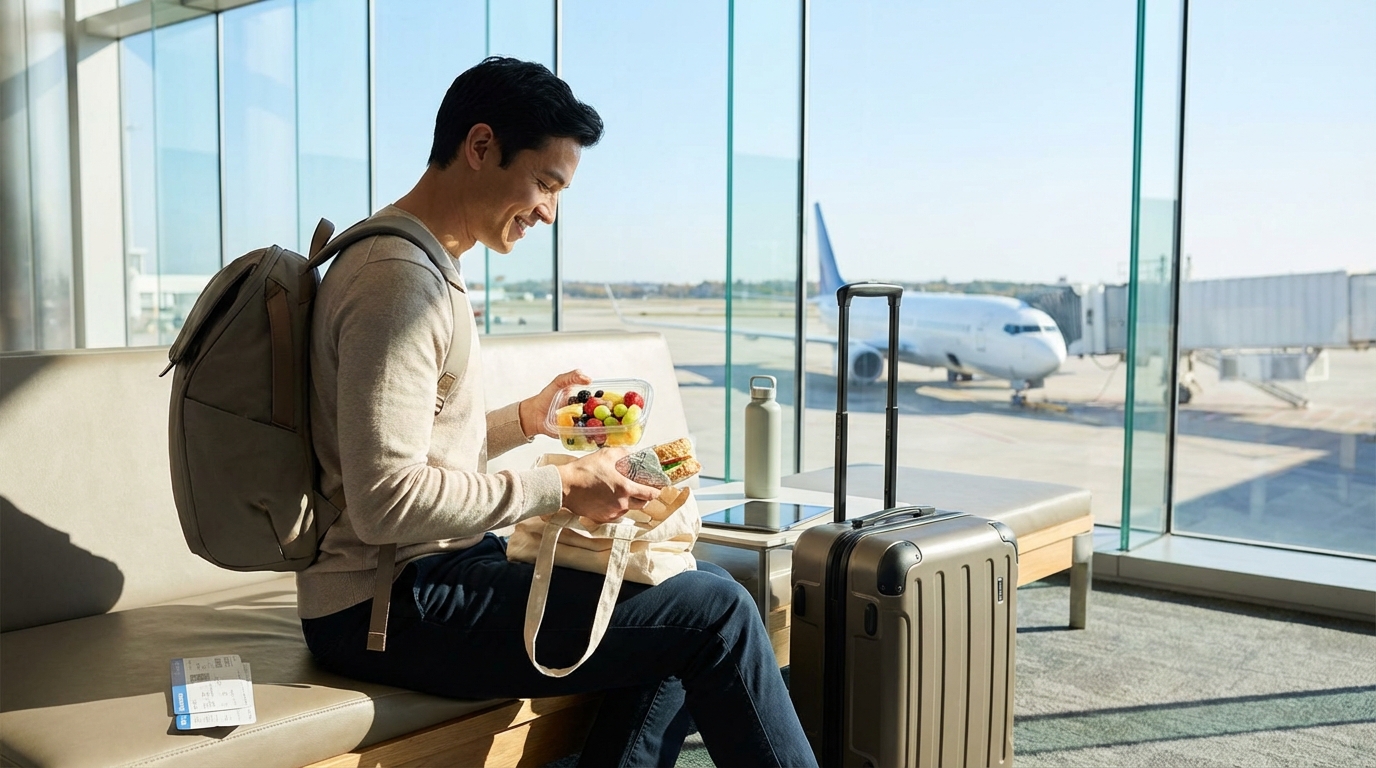
Yes, you can bring food on a plane. Solid foods like sandwiches, fruit, chips, and baked goods are allowed in carry-on and checked bags without restrictions. Liquid or gel-like foods follow the 3-1-1 rule.
Yes. You can absolutely bring food on a plane. Solid foods have no restrictions in carry-on or checked bags. You can pack a sandwich, a bag of trail mix, a whole rotisserie chicken -- whatever you want, as long as it's solid. The only foods that get complicated are liquids, gels, and spreads, which fall under the TSA's 3-1-1 rule.
Solid Foods: Anything Goes
If you can pick it up without it dripping or oozing, it's a solid food in TSA's eyes. You can bring as much as you want in your carry-on. No size limits. No quantity limits. No special containers required.
Here's what flies without any hassle:
- Sandwiches, wraps, and burgers
- Pizza (yes, really)
- Chips, crackers, pretzels, and popcorn
- Cookies, brownies, and baked goods
- Candy and chocolate
- Nuts, granola bars, and protein bars
- Bread, bagels, and muffins
- Whole fruits and vegetables
- Cooked meat, chicken, and fish
- Hard cheeses like cheddar, parmesan, and Swiss
- Dried fruit and jerky
- Canned goods (sealed)
All food goes through the X-ray machine. The TSA might ask you to take food items out of your bag if they're cluttering the X-ray image, but that's about it. Some airports ask you to place food in a separate bin, similar to electronics.
Liquid and Gel Foods: The 3-1-1 Rule Applies
This is where things get tricky. If it's spreadable, pourable, or scoopable, the TSA treats it like a liquid. That means each container must be 3.4 ounces (100 ml) or less, and it all has to fit in one quart-sized clear bag.
Foods that count as liquids:
- Soups, stews, and chili
- Yogurt
- Hummus and dips
- Peanut butter, almond butter, and Nutella
- Jams, jellies, and honey
- Salsa and hot sauce
- Salad dressing and condiment packets over 3.4 oz
- Soft cheeses like brie, cream cheese, and ricotta
- Syrups and gravies
- Canned goods with liquid (like tuna in water)
- Any food jarred in oil
- Frosting and icing
The 3.4-ounce limit applies to the container size, not the amount of food inside. A half-empty 8-ounce container of hummus is still too big. Buy travel-sized containers or just eat it before you fly.
Pro Tip: Buy After Security
Here's what experienced travelers do: bring your solid snacks from home, but buy any drinks and liquid-based foods after you pass through the TSA checkpoint. Airport restaurants, cafes, and convenience stores are all past security. A Starbucks coffee, a smoothie, a big container of soup -- all fair game once you're through the checkpoint.
You can also bring an empty water bottle and fill it at a water fountain after security. Most airports have bottle refill stations now.
Baby Food and Formula: Special Exception
Traveling with an infant? The TSA makes a significant exception to the 3-1-1 rule. You can bring formula, breast milk, juice for babies, and baby food in reasonable quantities that exceed 3.4 ounces.
Here's what you need to know:
- Declare these items to the TSA officer at the beginning of screening
- Separate them from your other liquids
- TSA may test them with additional screening (usually a quick test strip)
- You don't need to have the baby with you, though having them there avoids questions
- Ice packs, freezer packs, and gel packs for keeping formula cold are allowed
There's no specific volume limit -- "reasonable quantities" is intentionally vague. Bringing enough formula for your flight and a buffer is fine. Bringing a case of 24 bottles will raise eyebrows.
Ice and Frozen Foods
You can bring frozen foods through security, and they're a great way to keep other foods cold. But there's an important rule about ice:
Ice must be completely frozen solid when you go through the checkpoint. If it's partially melted and slushy, the TSA treats the liquid as... a liquid. Which means it needs to be under 3.4 ounces or it gets tossed.
Gel ice packs follow the same rule -- frozen solid or it's treated as a liquid. If you're checking a cooler, you're fine either way since liquid rules don't apply to checked bags. For carry-on coolers, freeze everything rock solid right before you leave for the airport.
Bringing Food on International Flights
TSA will let you through security with pretty much any solid food. But your destination country might not let you bring it in. This is where people get tripped up.
Many countries restrict or ban:
- Fresh fruits and vegetables -- to prevent agricultural pests from entering the country
- Raw or cooked meat -- animal disease concerns
- Dairy products -- restricted in many countries
- Seeds, nuts in shells, and plants -- biosecurity rules
- Homemade foods containing meat or produce -- customs may not accept "it's just a sandwich"
Countries like Australia, New Zealand, and Japan are notoriously strict. Even a forgotten apple in your bag can result in a fine. The U.S. has restrictions on what you can bring in from other countries too -- the USDA prohibits most fresh meats, produce, and dairy from entering the country.
For international flights, your safest bet is packaged, commercially sealed foods. Chips, candy bars, sealed crackers, and similar items rarely cause customs issues. Fresh food is where you run into problems.
Checked Bag Food Rules
Checked bags have almost no food restrictions from TSA's perspective. The 3-1-1 liquid rule only applies to carry-on, so you can pack a full jar of peanut butter, a bottle of hot sauce, or a container of soup in your checked luggage.
Practical tips for checked bag food:
- Double-bag everything in zip-lock bags -- pressure changes can pop lids
- Wrap glass jars in clothing for padding
- Don't pack anything that'll smell up your clothes if it leaks
- Keep perishable items in insulated bags with frozen gel packs
- Remember that checked bags sit in cargo holds that aren't temperature controlled
Bringing Food Through Security: What to Expect
When you send food through the X-ray, here's what might happen:
- Dense foods can trigger additional screening. Blocks of cheese, thick chocolate bars, and peanut butter look suspicious on X-ray because they're dense and uniform. The TSA might pull your bag and inspect them.
- TSA may ask you to unwrap items. Foil-wrapped foods can obscure the X-ray image. You might be asked to unwrap them or separate them.
- Powdered foods get extra attention. Large quantities of protein powder, spices, or powdered drink mixes in carry-on might get tested. Containers over 12 ounces of powder may need to go in checked bags.
None of this means your food will be confiscated. It just means a few extra seconds at the checkpoint. Keep food organized and easily accessible to speed things up.
Best Foods to Pack for a Flight
After hundreds of flights, here's what I've found works best:
- Sandwiches -- easy, filling, no utensils needed
- Cut-up veggies and fruit -- healthy and hydrating
- Nuts and trail mix -- calorie-dense, doesn't spoil
- Protein bars -- compact and filling
- Crackers and hard cheese -- no liquid issues
- Beef jerky -- shelf-stable protein
Avoid foods that are messy, smelly, or create a lot of trash. Your seatmates will thank you. Nobody wants to sit next to someone cracking open a container of tuna salad or hot curry at 35,000 feet.
The Bottom Line
Bring whatever solid food you want. Keep liquid foods under 3.4 ounces in your carry-on or pack them in checked bags. Buy drinks and soups after security. And if you're flying internationally, check your destination's customs rules before packing fresh produce, meat, or dairy. Airport food is overpriced, so bringing your own is one of the smartest moves you can make.
Frequently Asked Questions
Can I bring a sandwich through TSA?
Yes. Sandwiches are solid food and have no restrictions in carry-on bags. You can bring as many as you want. Just send them through the X-ray machine with your other belongings.
Can I bring peanut butter on a plane?
In carry-on, only in containers of 3.4 ounces or less. TSA classifies peanut butter as a liquid/spreadable. In checked bags, any size is fine.
Can I bring homemade food on a plane?
Yes, for domestic flights. Homemade solid foods like casseroles, baked goods, and sandwiches are allowed. Homemade liquid foods like soups follow the 3-1-1 rule in carry-on. For international flights, check destination customs rules.
Do I have to declare food at TSA?
No, you don't need to declare regular food items. The only exception is baby formula, breast milk, and juice for infants, which should be declared to the officer for separate screening. All food goes through the X-ray regardless.
Can I bring a whole pizza on a plane?
Yes. Pizza is solid food and is allowed in carry-on and checked bags. TSA has even confirmed this on social media. Just be prepared for the entire cabin to know what you're eating.
Written by Aviation Experts
Aviation Professionals
With decades of combined experience in the aviation industry, our team shares insider knowledge to make your travel experience smoother and less stressful.
Was this article helpful?