Can You Bring Eye Drops on a Plane?
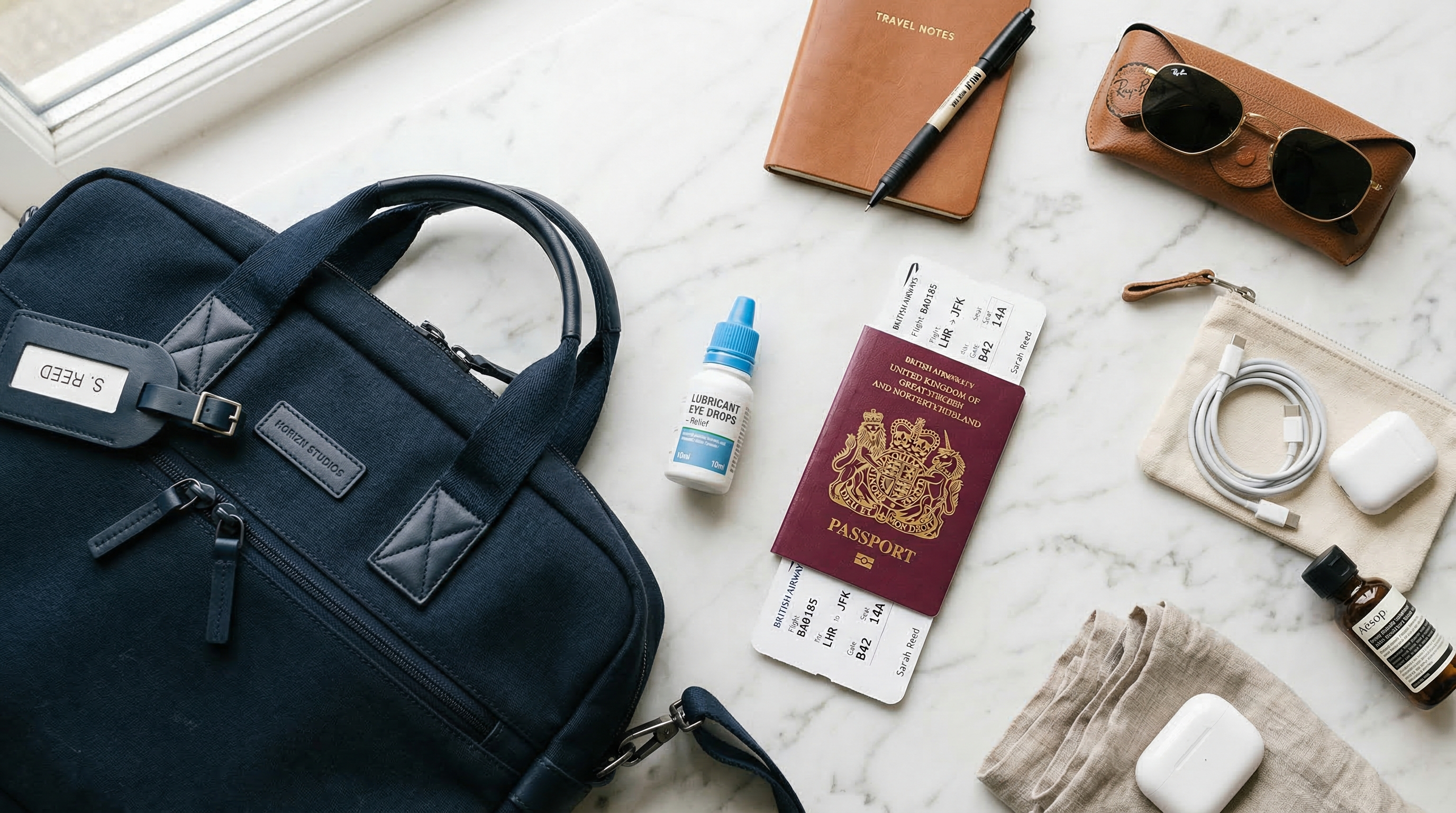
Quick Answer
Yes, you can bring eye drops on a plane in your carry-on bag. Most eye drop bottles are well under the 3.4-ounce TSA limit, so they rarely cause any issues at security.
Eye Drops Are Allowed on Planes
You can bring eye drops on a plane, and it's one of the easiest items to get through security. Most standard eye drop bottles are between 0.5 and 1 ounce, which is well under the TSA's 3.4-ounce (100 ml) liquid limit. Just toss the bottle in your quart-sized liquids bag and you're good to go.
This applies to all types of eye drops: over-the-counter artificial tears, prescription drops for glaucoma or allergies, contact lens rewetting drops, and redness relievers like Visine or Clear Eyes. The TSA doesn't distinguish between types.
TSA Rules for Eye Drops
Eye drops fall under the standard 3-1-1 liquids rule:
- 3.4 ounces or less per container
- 1 quart-sized clear, zip-top bag
- 1 bag per passenger
Since most eye drop bottles max out at around 0.5 ounces (15 ml), you'd need a truly enormous bottle to run into trouble. Even the larger multi-dose bottles typically sold at pharmacies are only 0.33 ounces (10 ml).
If you use prescription eye drops that come in a larger bottle, check the size printed on the label. As long as it's 3.4 ounces or under, it's fine for carry-on.
Medically Necessary Eye Drops: The Exception
Here's where it gets interesting. If you have a medical condition that requires eye drops in quantities exceeding 3.4 ounces, the TSA has an exception for medically necessary liquids. This covers prescription medications including eye drops.
To use this exception:
- Declare the eye drops to the TSA officer before screening begins.
- Separate them from your other liquids and place them in a separate bin.
- The officer may need to test the liquid or do additional screening.
- Having the prescription label on the bottle or carrying a doctor's note helps, though neither is technically required by TSA.
In practice, this exception is rarely needed for eye drops since the bottles are almost always small enough to comply with standard rules. But it's there if you need it.
Packing Eye Drops for Your Flight
A few practical tips to keep your eye drops in good shape during travel:
- Keep them accessible. Don't bury your eye drops at the bottom of your bag. You'll want them during the flight, and you need to put them in your liquids bag for screening.
- Bring extras. If you rely on prescription eye drops, pack a backup bottle in your checked luggage. Lost carry-on bags are rare, but it happens, and running out of prescription drops in an unfamiliar city is no fun.
- Watch the temperature. Some eye drops, especially certain prescription formulations, need to be stored at specific temperatures. The cargo hold can get extremely cold, and overhead bins can get warm. Keep temperature-sensitive drops in your personal item under the seat.
- Use single-use vials for convenience. Brands like Refresh and Systane sell preservative-free drops in individual vials. They're small, they don't count against your liquids bag space in any meaningful way, and you can toss them after use.
Why You'll Actually Want Eye Drops on the Plane
Airplane cabins are notoriously dry. The humidity inside a pressurized aircraft cabin sits around 10-20%, which is lower than most deserts. That dry air pulls moisture from your eyes, skin, and nasal passages throughout the flight.
If you wear contact lenses, this is even worse. Contacts act like tiny sponges on your eyeballs, and they dry out fast in low-humidity environments. After a few hours, your eyes can feel like sandpaper.
Here's what experienced travelers do:
- Apply drops before boarding. Start with well-lubricated eyes rather than waiting until they're already dry and irritated.
- Reapply every 1-2 hours on longer flights.
- Consider switching to glasses for flights over 4 hours. Your eyes will thank you.
- Use preservative-free drops if you're applying frequently. Drops with preservatives can irritate your eyes with repeated use in a short period.
Contact Lens Solution Rules
While we're on the topic of eye care, contact lens solution follows the same 3-1-1 rule as everything else. Most travel-sized bottles are 2 ounces, which is fine. But that big 12-ounce bottle from your bathroom counter won't make it through security.
Contact lens solution also qualifies for the medically necessary liquids exception. If you need a full-sized bottle for a long trip and don't want to check a bag, declare it at the checkpoint. But honestly, it's easier to just buy a travel-sized bottle or pick one up at your destination.
A few specific tips for contact lens wearers:
- Pack a contact lens case with solution already in it. This way you can pop your lenses out mid-flight if they get uncomfortable.
- Bring your glasses as a backup, even if you never wear them on the ground.
- Don't sleep in your contacts on the plane. The combination of dry air, reduced oxygen, and closed eyes is a recipe for irritation or worse.
Checked Luggage vs. Carry-On
You can pack eye drops in either your carry-on or checked luggage. There are no restrictions on liquids in checked bags (aside from hazardous materials, which eye drops obviously aren't).
But here's the thing: always keep at least one bottle in your carry-on. If your checked bag gets lost or delayed, you don't want to be without your eye drops, especially if they're prescription. You also can't access your checked luggage during the flight, which is exactly when you'll need them most.
International Travel With Eye Drops
Most countries follow liquid restrictions similar to the TSA's 3-1-1 rule. The European Union, UK, Canada, Australia, and Japan all cap carry-on liquids at 100 ml per container.
If you're carrying prescription eye drops internationally, it's smart to:
- Keep them in their original packaging with the pharmacy label.
- Carry a copy of your prescription or a letter from your doctor, especially if the medication contains controlled substances.
- Research your destination's rules on importing medications. Most standard eye drops are fine everywhere, but some prescription formulations containing steroids or controlled ingredients may have restrictions in certain countries.
Common Eye Drop Brands and Their Sizes
Here's a quick reference so you can check whether your specific drops are carry-on friendly (spoiler: they almost certainly are):
- Visine - 0.5 oz (15 ml)
- Clear Eyes - 0.5 oz (15 ml)
- Refresh Tears - 0.5 oz (15 ml)
- Systane Ultra - 0.33 oz (10 ml)
- Rohto - 0.4 oz (13 ml)
- Lumify - 0.25 oz (7.5 ml)
- Pataday (prescription/OTC) - 0.085 oz (2.5 ml)
Every single one of these is well under 3.4 ounces. You'd have to bring dozens of bottles before your liquids bag started getting crowded.
Frequently Asked Questions
Do eye drops need to go in the liquids bag at TSA?
Technically yes, eye drops are a liquid and should go in your quart-sized zip-top bag. But because the bottles are so small, TSA agents rarely flag them even if you forget. To avoid any hassle, just drop them in your liquids bag before you get to the checkpoint.
Can I use eye drops during the flight?
Absolutely. Once you're past security, you can use your eye drops whenever you want during the flight. Flight attendants won't have any issue with it. Given how dry cabin air is, they'll probably think it's a smart move.
Do I need a prescription label on my eye drops to fly?
No. TSA doesn't require a prescription label for eye drops. However, if you're carrying prescription eye drops internationally, keeping them in their original labeled packaging can prevent questions at customs in other countries.
Written by Aviation Experts
Aviation Professionals
With decades of combined experience in the aviation industry, our team shares insider knowledge to make your travel experience smoother and less stressful.
Was this article helpful?