Can A Plane Take Off In The Rain?
Quick Answer
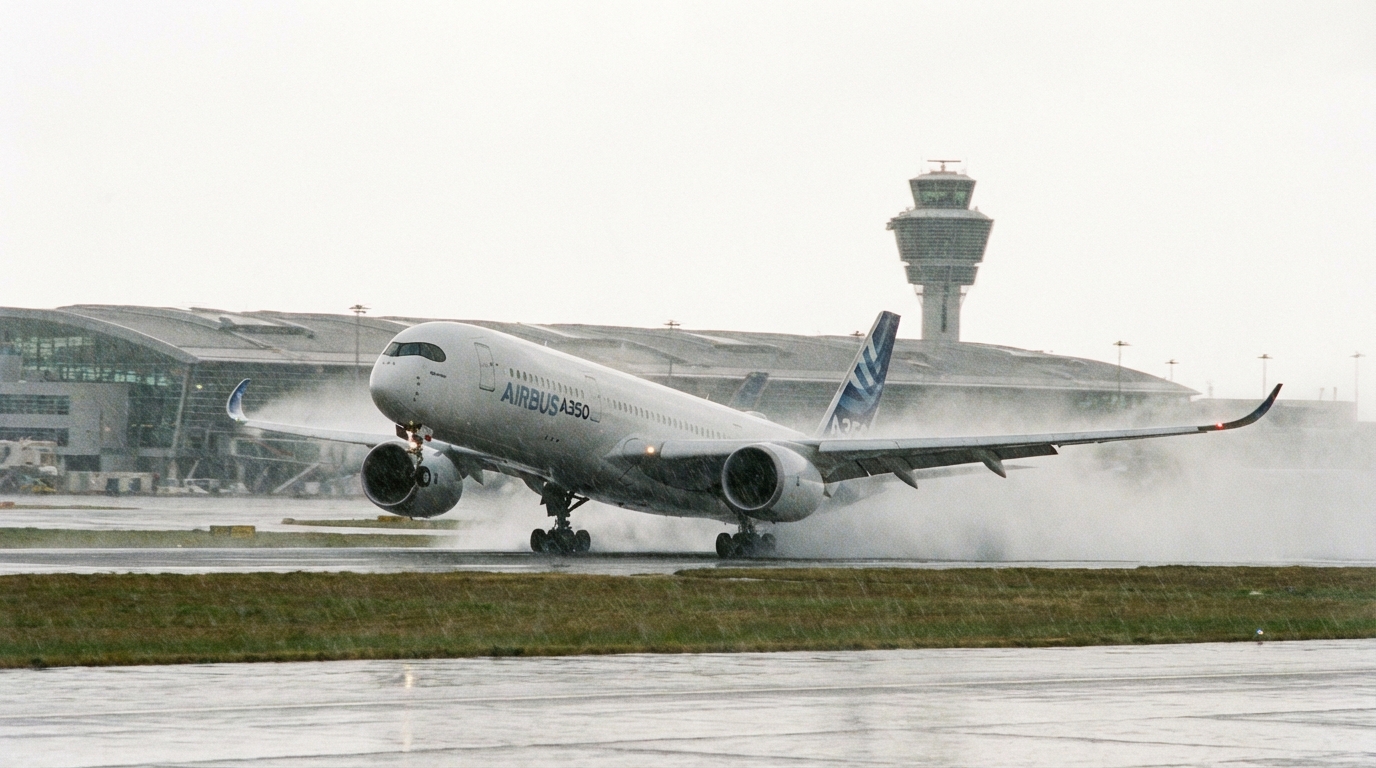
Yes, planes take off in rain all the time. Rain alone almost never cancels a flight. It's the stuff that comes with heavy rain — thunderstorms, wind shear, freezing conditions — that causes delays and cancellations.
The Short Answer: Yes, Absolutely
Planes take off and land in rain every single day around the world. Rain by itself is not a safety concern for modern commercial aircraft. Your flight isn't getting canceled because of a little drizzle — or even a heavy downpour.
Modern jets are engineered to handle wet conditions. The engines don't care about water. The wings still generate lift. The instruments still work. Pilots train extensively for rainy conditions, and aircraft certification requires performance testing in all kinds of weather.
So if you're staring out the terminal window at a rainy tarmac wondering if your flight will leave on time, the answer is almost certainly yes. But there are exceptions worth knowing about.
Why Rain Alone Doesn't Ground Planes
Aircraft are designed to operate in precipitation. Here's why rain isn't the problem people think it is:
- Jet engines ingest rain without issue. Modern turbofan engines can handle enormous amounts of water. They're tested by having hundreds of gallons of water per minute thrown into them during certification. A rainstorm doesn't come close to overwhelming them.
- Wings still produce lift. Rain doesn't change the aerodynamics enough to matter. The airflow over the wings works the same way whether it's dry or pouring.
- Avionics are sealed and waterproof. The electronics that run the aircraft are protected from moisture. Pilots rely on instruments in rain just as they do in clear skies.
- Windshield wipers and rain repellent exist. Cockpit windshields have wipers and chemical rain repellent systems that keep visibility clear for pilots during takeoff and landing.
Commercial aviation wouldn't function if rain grounded planes. Think about cities like Seattle, London, or Mumbai — airports in those regions operate in rain constantly.
What Actually Happens on a Wet Runway
The runway is where rain has the most practical impact, and pilots account for it every time.
Wet runways reduce braking effectiveness. Just like driving a car on wet roads, stopping distances increase. Pilots calculate this before every takeoff and landing. They'll adjust their approach speed, use more runway, and deploy thrust reversers and spoilers more aggressively.
Hydroplaning is a real concern. If water pools on a runway, tires can lose contact with the pavement. Airports combat this with grooved runways that channel water away, and maintenance crews monitor drainage during heavy rain. Most major runways are designed to drain quickly.
Takeoff calculations change. Pilots use performance charts that factor in wet runway conditions. They may need a longer takeoff roll or reduce the maximum takeoff weight. This is routine math that happens before every departure.
None of this stops flights. It just means pilots adjust their technique — something they're thoroughly trained to do.
When Rain Actually Does Delay Flights
Rain itself rarely causes cancellations, but the weather systems that produce heavy rain often bring other hazards that do:
Thunderstorms
This is the big one. Thunderstorms contain severe turbulence, lightning, hail, and wind shear — any of which can be dangerous. The FAA prohibits takeoffs and landings when thunderstorms are directly over or approaching an airport. Lightning within a certain radius also stops ground operations, meaning baggage handlers and fuelers can't work on the ramp.
It's not the rain in a thunderstorm that's the problem. It's everything else packaged with it.
Wind Shear and Microbursts
Heavy rain often comes with sudden wind changes. Wind shear — a rapid shift in wind speed or direction — is one of aviation's most dangerous phenomena, especially during takeoff and landing. Microbursts, powerful downdrafts that slam air toward the ground, are particularly hazardous. Airports have wind shear detection systems, and when they trigger alerts, departures and arrivals pause.
Reduced Visibility
Extremely heavy rain can reduce visibility below the minimums required for takeoff and landing. Pilots need to see the runway at specific distances during approach, and if rain is so intense they can't, they'll go around or divert. This is rare with normal rain but happens during extreme tropical downpours.
Visibility minimums vary by airport and approach type. Instrument Landing Systems (ILS) allow landings in very low visibility — some down to just 300 feet of forward visibility — but there are still limits.
Freezing Rain
This is arguably worse than a thunderstorm. Freezing rain coats aircraft surfaces with ice, which changes the shape of the wings and disrupts airflow. Before takeoff in freezing rain, planes must be de-iced — sprayed with a heated glycol solution that removes ice and prevents new accumulation for a limited time.
If freezing rain is persistent, the de-icing fluid can expire before the plane reaches the runway, requiring a second application. In severe freezing rain events, airports may shut down entirely because conditions change faster than crews can de-ice.
Crosswinds
Heavy rain systems often bring strong winds. Every aircraft type has a maximum crosswind limit — typically around 30-40 knots (35-46 mph) for commercial jets. If wind exceeds these limits, flights won't depart or land until conditions improve.
How Pilots Are Trained for Rain
Pilots don't wing it (no pun intended) when rain shows up. They're extensively trained for wet-weather operations:
- Simulator training includes wet runway scenarios, wind shear encounters, and low-visibility approaches. Pilots practice these regularly during recurrent training.
- Performance calculations for every takeoff and landing account for runway conditions. Pilots use specific data for dry, wet, and contaminated runways.
- Weather briefings before every flight include current conditions, forecasts, and any significant weather along the route. Pilots know exactly what to expect.
- Decision-making authority. The captain has final say on whether conditions are safe. If a pilot isn't comfortable, the flight waits. Period.
What Happens During the Flight
Flying through rain at cruising altitude is a non-event. You might hear rain hitting the fuselage, and the seatbelt sign might come on if there's associated turbulence, but the aircraft handles it effortlessly.
Turbulence is more common in and around rain clouds, especially cumulonimbus (thunderstorm) clouds. Pilots use onboard weather radar to see precipitation ahead and route around the heaviest areas. That's why your flight path sometimes deviates from the straight line — the crew is navigating around weather cells.
At cruising altitude (30,000-40,000 feet), rain isn't even rain anymore. At those temperatures, precipitation is ice crystals, and planes fly through them routinely.
Tips for Flying in Rainy Weather
If rain is in the forecast for your travel day, here's how to handle it:
- Don't panic about cancellations. Check your airline app for real-time updates. If it's just rain, your flight is almost certainly going.
- Watch for thunderstorms, not rain. Thunderstorm warnings are what cause ground stops and delays. The FAA's ground delay programs and ground stops are triggered by convective weather, not rain itself.
- Build in buffer time. Wet roads mean slower drives to the airport. Traffic on rainy days is worse. Leave earlier than you normally would.
- Expect some turbulence. Rainy weather can mean a bumpier ride, especially during climb and descent. Keep your seatbelt fastened and don't worry — turbulence is uncomfortable but not dangerous for the aircraft.
- Have a backup plan for connections. If thunderstorms are moving through your connecting airport, delays are likely. Know your rebooking options before you need them.
The Numbers Tell the Story
Weather accounts for roughly 75% of all flight delays in the National Airspace System. But the vast majority of those delays are caused by thunderstorms, wind, snow, ice, and fog — not rain alone. Pure rainfall without any accompanying severe weather is responsible for a tiny fraction of disruptions.
In fact, the most common weather-related delay isn't even at your airport. It's en route congestion caused by thunderstorms forcing hundreds of flights to reroute around storm cells, creating aerial traffic jams that ripple across the system.
Bottom Line
Rain is one of the least concerning weather conditions in aviation. Your plane can handle it, your pilots are trained for it, and the airport is designed for it. The only time rain becomes a real issue is when it brings friends — thunderstorms, freezing conditions, extreme winds, or near-zero visibility. And even then, the delays are about those conditions, not the rain itself.
So next time it's pouring outside and you've got a flight to catch, relax. You're almost certainly getting where you need to go.
Frequently Asked Questions
Can planes fly through heavy rain?
Yes. Modern commercial aircraft are certified to fly through heavy rain without any issues. Jet engines can ingest large amounts of water, and the wings still produce lift normally. Pilots may encounter reduced visibility in extremely heavy rain, but this is uncommon and usually short-lived.
Does rain cause turbulence?
Rain itself doesn't cause turbulence, but the weather systems that produce rain — especially thunderstorms and convective activity — do. Flying through or near rain clouds can be bumpy, but pilots use onboard weather radar to navigate around the worst areas.
Will my flight be canceled because of rain?
Almost certainly not. Rain alone rarely cancels flights. Cancellations happen when rain is accompanied by thunderstorms, freezing conditions, dangerous wind shear, or visibility that drops below safe minimums. If your airline app shows a weather delay during rain, it's likely one of these associated conditions causing the issue.
Is it safe to take off on a wet runway?
Yes. Pilots adjust their takeoff calculations for wet runway conditions, accounting for reduced braking effectiveness and longer stopping distances. Runways at major airports are grooved to drain water quickly, and pilots are trained extensively for wet-runway operations.
Do planes get struck by lightning in rain?
Commercial aircraft are struck by lightning on average once or twice per year, and it's almost always a non-event. Planes are designed to conduct lightning safely around the exterior without damaging internal systems or harming passengers. After a lightning strike, the aircraft is inspected on the ground but can typically continue flying.
Written by Aviation Experts
Aviation Professionals
With decades of combined experience in the aviation industry, our team shares insider knowledge to make your travel experience smoother and less stressful.
Was this article helpful?