Domestic vs International Flight Rules: Key Differences
Quick Answer
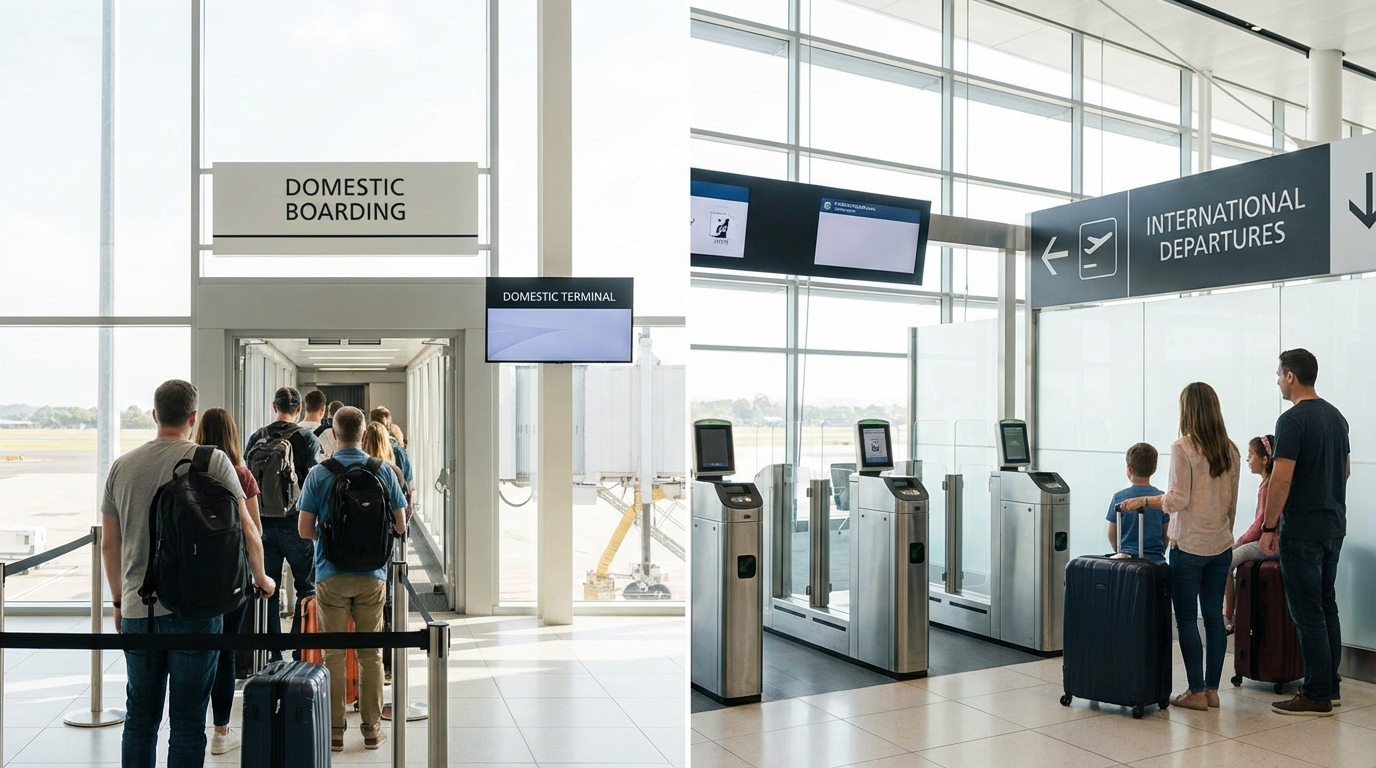
Domestic flights need a REAL ID or valid photo ID. International flights require a passport — and often a visa. But the differences go way beyond what's in your wallet.
The Biggest Difference: What You Need to Board
For domestic flights within the U.S., you need a REAL ID-compliant driver's license or another TSA-accepted form of identification. Since May 2025, standard (non-REAL ID) licenses are no longer accepted at TSA checkpoints. If you show up without a REAL ID or acceptable alternative, you'll need to pay a $45 TSA ConfirmID fee for a 10-day travel window.
For international flights, you need a valid passport. Period. And most countries require your passport to have at least six months of validity remaining beyond your travel dates. Show up with a passport that expires in two months, and you might not be allowed to board — even if it's technically still valid.
Some destinations also require a visa. That's a whole separate application process that can take weeks or months depending on the country. Always check entry requirements well before you book.
How Early Should You Arrive?
This is where a lot of travelers mess up.
For domestic flights, arrive at least 2 hours before departure. That gives you enough time for check-in, security screening, and getting to your gate without sprinting through the terminal.
For international flights, bump that to 3 hours. You're dealing with longer check-in lines, potential document verification, and sometimes additional security screening. Some international carriers won't even let you check in if you arrive less than 60 minutes before departure.
During peak travel seasons — think summer, holidays, spring break — add an extra 30 minutes to both of those recommendations. Airport crowds are unpredictable, and TSA wait times can spike without warning.
Security Screening: Same But Different
TSA handles security for both domestic and international flights departing from U.S. airports. The process is the same: shoes off (unless you have PreCheck), laptops out, liquids in a quart-sized bag, walk through the scanner.
The difference is what happens after security. On domestic flights, you head straight to your gate. On international flights, you might pass through additional passport verification or immigration checks before reaching the international terminal. Some airports have entirely separate international terminals with their own security lines.
When you arrive on an international flight back to the U.S., you'll go through customs and immigration — a process that doesn't exist for domestic arrivals. This involves presenting your passport, answering questions about your trip, and declaring any goods you're bringing back.
Baggage Rules and Allowances
Baggage policies differ significantly between domestic and international flights, and it's not just about weight limits.
Domestic Flights
- Carry-on: One carry-on bag plus one personal item is standard across most U.S. carriers (basic economy fares on some airlines may restrict this)
- Checked bags: Most domestic airlines charge $30-$45 for the first checked bag and $40-$55 for the second
- Weight limit: Typically 50 lbs per checked bag
International Flights
- Carry-on: Same as domestic — one carry-on plus one personal item
- Checked bags: Many international flights include at least one free checked bag in economy, sometimes two
- Weight limit: Usually 50 lbs (23 kg) per bag, with some carriers allowing up to 70 lbs (32 kg) in business class
The free checked bag on international routes is a big deal. A round-trip domestic flight on American or United could cost you $70-$90 in bag fees alone. That same airline might include a checked bag free on your transatlantic flight.
Customs and Immigration
This is the biggest operational difference you'll experience. Domestic flights have nothing like this.
When you arrive on an international flight entering the U.S., you'll go through a multi-step process:
- Immigration/Passport Control: An officer checks your passport, asks about your trip purpose and duration, and may take your fingerprints and photo
- Baggage Claim: You collect your checked bags (even if you have a connecting domestic flight)
- Customs Declaration: You declare any goods purchased abroad and go through a customs inspection
U.S. citizens returning from abroad get an $800 duty-free exemption every 31 days. You can also bring back 1 liter of alcohol (if you're 21+), 200 cigarettes, and up to 100 cigars duty-free. Anything over those limits gets taxed.
Global Entry members skip the regular immigration line and use automated kiosks, which can save 30-60 minutes during peak arrival times. If you travel internationally more than once or twice, it's worth the $100 application fee.
Flight Booking and Ticket Rules
Domestic and international tickets follow different pricing and change policies at many airlines.
Hidden city ticketing is a bigger issue on international routes. Skipping a segment on an international itinerary can have more severe consequences because airlines monitor international routing more closely.
One-way vs. round-trip pricing also diverges. Domestic one-way fares are typically half the round-trip price. International one-way fares are often more than half the round-trip — sometimes dramatically so. A one-way flight to Europe could cost $1,000 while the round-trip is $500.
Some countries require proof of onward travel before they'll let you enter. If you're flying internationally on a one-way ticket, check whether your destination requires evidence that you plan to leave (a return flight or onward booking).
In-Flight Differences
The experience on the plane itself changes on international routes:
- Customs forms: Flight attendants distribute arrival/customs declaration cards before landing on international flights
- Seat pitch and amenities: International long-haul aircraft typically have more legroom, larger entertainment screens, and complimentary meals — even in economy
- Electronics rules: Cell phones must be in airplane mode on all flights, but some international carriers allow in-flight calling on certain routes
- Duty-free shopping: Available on many international flights but not domestic ones
Health and Entry Requirements
Domestic flights have no health-related entry requirements. International travel is a different story.
Some countries require proof of specific vaccinations — yellow fever is the most common mandatory one. Others may require health declarations or proof of travel insurance. These requirements change frequently, so check your destination's current rules before departure.
The CDC maintains a traveler's health page with country-specific recommendations. Your airline will also verify certain health documents at check-in for destinations that require them. If you don't have the right documentation, the airline can refuse to board you — and they won't refund your ticket.
Phone and Communication Rules
On domestic flights, you can use your phone right up until the cabin door closes, and again the moment you land. International flights follow the same rule when departing from the U.S., but arrival procedures differ. When landing in a foreign country, local regulations may affect when you can use your device.
International roaming is the bigger concern. Without an international plan, your phone could rack up massive charges the moment it connects to a foreign network after landing. Consider buying a local SIM card, activating an international day pass through your carrier, or using an eSIM before departure. None of this is a factor on domestic routes.
Currency and Payment
Domestic travel is straightforward — everything is in U.S. dollars, and your credit and debit cards work everywhere. International travel introduces currency exchange, foreign transaction fees, and the question of how much local cash to carry.
Before an international trip, notify your bank and credit card companies so they don't flag foreign charges as fraud. Cards with no foreign transaction fees (Chase Sapphire, Capital One Venture, etc.) save you the typical 3% surcharge on every purchase abroad. Carry some local currency for taxis, tips, and small vendors that don't accept cards.
What Happens When Things Go Wrong
Passenger protection rules differ too. Under U.S. Department of Transportation rules, domestic and international flights have similar protections for cancellations and delays when flying U.S. carriers.
But if you're flying on a foreign carrier, EU Regulation 261/2004 may apply to flights departing from Europe. That regulation provides significantly stronger passenger protections, including up to 600 euros in compensation for long delays — something U.S. domestic rules don't match.
Lost baggage on international flights is governed by the Montreal Convention, which caps airline liability at approximately $1,800. Domestic baggage claims follow DOT rules with a maximum liability of $3,800. So you actually have better protection for lost bags on domestic routes.
Bottom Line
Domestic flights are simpler in every way — less paperwork, shorter airport times, fewer surprises. International travel adds layers of complexity with passports, visas, customs, immigration, and varying baggage rules. The key is knowing what's required before you get to the airport. Nothing ruins a trip faster than being turned away at check-in because your passport is expired or you don't have the right visa.
Frequently Asked Questions
Do I need a passport for a domestic flight in the U.S.?
No, but you need a REAL ID-compliant driver's license or another TSA-accepted ID. A passport works too, but it's not required for domestic flights.
How early should I arrive for an international flight?
At least 3 hours before departure. International check-in takes longer due to document verification, and some airlines close check-in 60 minutes before departure.
Do international flights include free checked bags?
Most international flights include at least one free checked bag in economy class, unlike domestic flights where checked bags typically cost $30-$45 each.
What happens at customs when I return from an international trip?
You'll go through immigration (passport check), collect your bags, and pass through customs where you declare any goods purchased abroad. U.S. citizens get an $800 duty-free exemption every 31 days.
Is TSA security different for international flights?
The TSA screening process is the same for domestic and international flights departing from U.S. airports. The difference is you may face additional passport checks before reaching international gates.
Written by Aviation Experts
Aviation Professionals
With decades of combined experience in the aviation industry, our team shares insider knowledge to make your travel experience smoother and less stressful.
Was this article helpful?