Can You Bring a Snowboard on a Plane?
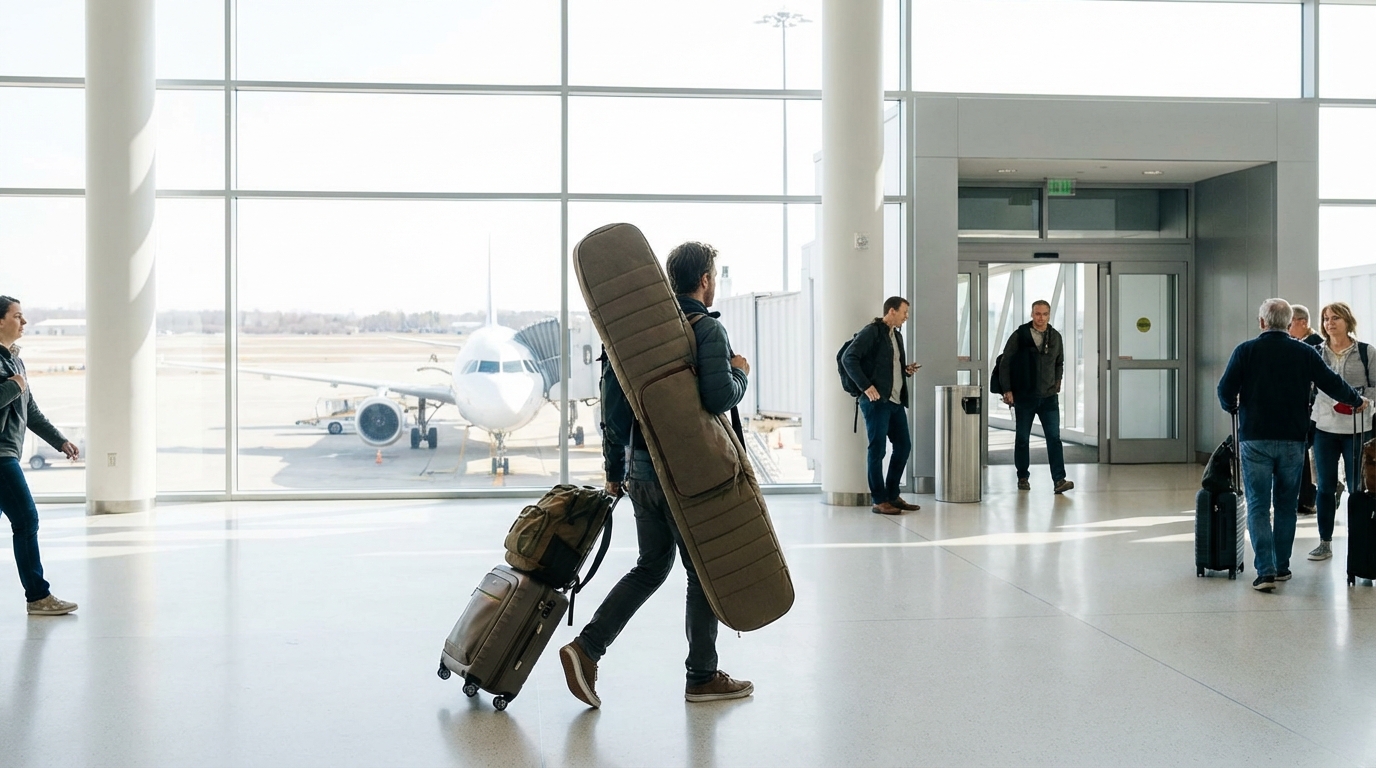
Quick Answer
Yes, you can bring a snowboard on a plane as checked baggage. TSA doesn't allow snowboards in the cabin, but every major airline accepts them as checked items. Most carriers count your snowboard bag and boot bag as a single checked piece at standard fees.
The Quick Answer
Snowboards are checked baggage only — you can't bring one in the cabin. TSA doesn't allow them through the security checkpoint because of their size. But every major U.S. airline accepts snowboards as checked luggage, and most count your board bag and boot bag as one checked item.
The process is straightforward: pack your board in a snowboard bag, check it at the counter, and pick it up at baggage claim. The main variables are airline fees and keeping your gear under 50 pounds.
TSA Rules for Snowboard Equipment
TSA's position on snowboard gear:
- Snowboard: Checked bags only
- Snowboard boots: Carry-on or checked (soft boots fit easily in carry-on)
- Bindings: Checked bags only (attached to the board)
- Helmet: Carry-on or checked
- Goggles: Carry-on or checked
- Hand/toe warmers: Carry-on or checked
- Wax and tuning tools: Checked bags only for scrapers and edge tools
The snowboard itself is the issue — it's big, rigid, and could theoretically be used as a weapon. Same reason skis can't go in the cabin. Everything else is pretty flexible.
Airline Snowboard Policies
Airlines have gotten much better about snowboard fees in recent years. Here's what each major carrier charges.
Delta Air Lines
- One snowboard bag and one boot bag = one checked item
- Standard checked bag fee ($35 first bag domestic)
- 50 lb combined weight limit
- Maximum 115 linear inches
- No oversize surcharge for snowboard bags
American Airlines
- One snowboard and one equipment bag = one checked item
- Standard checked bag fees ($40 first bag, $45 second bag)
- 50 lb weight limit at standard rate
- Overweight fee (around $100) applies above 50 lbs
United Airlines
- Allows up to two snowboards and one boot bag as one checked item
- Standard checked bag fees ($35 first bag domestic)
- 50 lb weight limit
- One of the more generous policies for riders with multiple boards
Southwest Airlines
- Snowboard bag and boot bag count as one of two free checked bags
- Oversize fees waived for snowboard equipment
- Overweight fees apply above 50 lbs
- Best deal in the air for snowboarders — essentially free
JetBlue
- Snowboard equipment counts as a standard checked bag
- No additional sports equipment fee
- Standard checked bag fees and weight limits apply
Alaska Airlines
- One snowboard and one boot/helmet bag = one checked item
- Standard checked bag fees apply
- Great choice for Pacific Northwest destinations
Snowboard Bag Options
You need a bag. Airlines won't accept a naked snowboard. Here's what's available.
Basic Padded Board Bag
- Cost: $40-$100
- Protection: Light padding, protects against scrapes
- Weight: 2-5 lbs
- Best for: Budget-conscious riders, shorter trips
- Brands: Burton, Dakine, Ride
Fully Padded Board Bag
- Cost: $100-$200
- Protection: Thick padding throughout, reinforced edges
- Weight: 5-8 lbs
- Best for: Regular flyers, protecting expensive boards
- Brands: Burton Wheelie Gig Bag, Dakine High Roller, Thule RoundTrip
Wheeled Coffin Bag
- Cost: $150-$350
- Protection: Maximum — thick padding, wheels for transport, boot compartment
- Weight: 8-15 lbs
- Best for: Frequent flying riders, those with heavy setups
- Brands: Burton Wheelie Board Case, Dakine Low Roller, DB Journey
The coffin-style bags that hold your board, boots, and outerwear in one bag are convenient but heavy. A board plus boots plus a 12 lb bag can push close to 50 lbs before you add anything else. If weight is tight, go with a lighter bag and check your boots separately (they still count as part of the same checked item at most airlines).
How to Pack Your Snowboard
Proper packing prevents damage and keeps weight in check.
The Board
- Wax the base before packing. A fresh wax coat protects the base from scratches during transit.
- Remove or fold down highbacks. Some bindings have removable highbacks. If yours do, take them off to create a flatter profile.
- Protect the edges. Edge guards or even strips of cardboard taped along the edges prevent them from cutting through the bag.
- Consider removing bindings. If you're tight on weight or worried about damage, remove the bindings and pack them separately inside the bag. They're the most protruding part and most likely to get smashed.
Filling the Bag
- Pack clothing around the board. Base layers, snow pants, and jackets make excellent padding. This also frees up space in your suitcase.
- Put boots along the edges. If your bag has a boot compartment, use it. Otherwise, place boots on either side of the board where they act as bumpers.
- Stuff the nose and tail. The tips of the board are most vulnerable. Pack gloves, beanies, or socks at both ends.
- Lay goggles flat on top. If you're packing goggles in the board bag, put them face-up on a flat surface so they don't get crushed.
Weight Management Tips
Here's what a typical snowboard setup weighs:
- Snowboard with bindings: 8-14 lbs
- Snowboard boots: 5-8 lbs
- Snowboard bag: 3-15 lbs (varies widely by type)
- Helmet: 1-2 lbs
- Goggles: 0.5 lbs
That's 17-40 lbs of just gear, leaving 10-33 lbs for clothing and padding. A lightweight bag makes a huge difference here. If you're using a 12 lb wheeled coffin bag, you've got much less room for extras than with a 3 lb basic bag.
Tips to stay under 50 lbs:
- Wear your heaviest outerwear on the plane
- Put your helmet in your carry-on (it's allowed)
- Use a lighter bag if your board setup is heavy
- Ship boots separately if needed
Shipping Your Snowboard vs. Flying With It
Shipping is a legitimate alternative, especially for longer trips or expensive setups.
- Ship Skis / Luggage Free: Door-to-door services starting around $60-$100 each way
- FedEx/UPS: Ship your own bag for $50-$150+ depending on dimensions and distance
Ship when:
- You have multiple connections and worry about lost luggage
- You want to travel through the airport hands-free
- Your gear exceeds 50 lbs and overweight fees would cost more than shipping
Fly with it when:
- You're on Southwest (free checked bags)
- You're flying direct
- You want your gear immediately on arrival
- The standard checked bag fee is cheaper than shipping
Renting vs. Bringing Your Own Board
If you don't ride more than a few days a season, renting at the resort is worth considering. Demo rentals cost $45-$80/day and let you try new boards. High-end resort rentals have gotten surprisingly good.
Bring your own board if:
- You ride more than 4-5 days per trip (rental costs exceed airline fees quickly)
- You have a custom setup with specific bindings and stance angles
- You ride park and need your specific board's flex and profile
- You travel to ride multiple times per season
Tips for a Smooth Trip
- Weigh everything at home. Use a luggage scale. Surprises at the check-in counter are expensive surprises.
- Wear your jacket and snow pants on the plane. They're the heaviest items in your kit. Wearing them saves pounds in the bag.
- Fly direct to mountain towns. Denver, Salt Lake City, Reno-Tahoe, and Bozeman all have airports close to major resorts.
- Book morning flights. If your bag gets delayed, it might still make a later flight the same day.
- Drop an AirTag in the bag. Peak season means crowded baggage claims and more opportunities for mix-ups. Track your gear in real time.
- Use TSA-approved locks. TSA can inspect without cutting your lock off.
- Arrive early at the airport. Oversized items take longer to check and sometimes need manual handling.
Common Mistakes Snowboarders Make When Flying
Learn from other people's errors so you don't repeat them.
- Not protecting the base. A fresh wax job before packing does double duty — it protects the base from scratches and means you're ready to ride on arrival. Worth the 15 minutes.
- Leaving binding screws loose. Vibration during transit can loosen binding screws. Tighten them before packing, and bring a small screwdriver to double-check at the resort.
- Overpacking the bag. Stuffing outerwear, boots, helmet, and accessories into one coffin bag is convenient but heavy. It's easy to blow past 50 lbs without realizing it. Weigh at home.
- Assuming boot bags are separate. Most airlines count your board bag and boot bag as one item — but if you're unclear, confirm at check-in. You don't want a surprise second bag charge at the counter.
- Not documenting your gear. Take photos of your board and bindings before packing. Note any existing scratches or dings. If the airline damages your gear, you'll need proof of the pre-existing condition for your claim.
Snowboard Destinations and Airport Tips
Picking the right airport makes your trip easier.
- Denver (DEN): Hub for Colorado resorts. Breckenridge, Keystone, and Vail are all within 1.5-2 hours. Large airport with good oversized baggage handling.
- Salt Lake City (SLC): Park City, Snowbird, and Brighton are all under an hour from the airport. Utah's "Greatest Snow on Earth" lives up to the hype.
- Reno-Tahoe (RNO): Access to Palisades Tahoe, Northstar, and Heavenly. Smaller airport means faster in and out.
- Bozeman (BZN): Gateway to Big Sky, Bridger Bowl, and Yellowstone Club. Small airport, easy baggage claim.
- Burlington (BTV): Access to Stowe, Sugarbush, and other Vermont resorts. East Coast riders' best option for flying in.
Frequently Asked Questions
Can I carry a snowboard on the plane as carry-on?
No. Snowboards must go in checked baggage. TSA doesn't allow them through the security checkpoint due to their size. Snowboard boots, helmets, and goggles can go in carry-on, but the board itself must be checked.
Do I need a snowboard bag to fly?
Yes. Airlines require snowboards to be in a bag or case — they won't accept a bare board. Options range from basic padded bags ($40-$100) to wheeled coffin bags with boot compartments ($150-$350). Even a cheap padded bag is better than nothing.
How much does it cost to fly with a snowboard?
Most airlines charge standard checked bag fees ($35-$45 domestic). Southwest includes snowboard equipment in its two free checked bags. Your board bag and boot bag typically count as one checked item. Overweight fees ($100+) apply if the combined weight exceeds 50 lbs.
Should I remove snowboard bindings before flying?
It's not required, but removing bindings creates a flatter profile that fits better in the bag and reduces the risk of binding damage from rough handling. If you leave them on, fold down the highbacks and make sure nothing is sticking out that could catch on baggage handling equipment.
Can I bring two snowboards on a plane?
Yes. United Airlines explicitly allows up to two snowboards and one boot bag as a single checked item. Other airlines generally allow multiple boards in one bag as long as you stay under the weight limit. Check your specific airline's policy to confirm.
Written by Aviation Experts
Aviation Professionals
With decades of combined experience in the aviation industry, our team shares insider knowledge to make your travel experience smoother and less stressful.
Was this article helpful?