Can You Bring Contact Lens Solution on a Plane?
Quick Answer
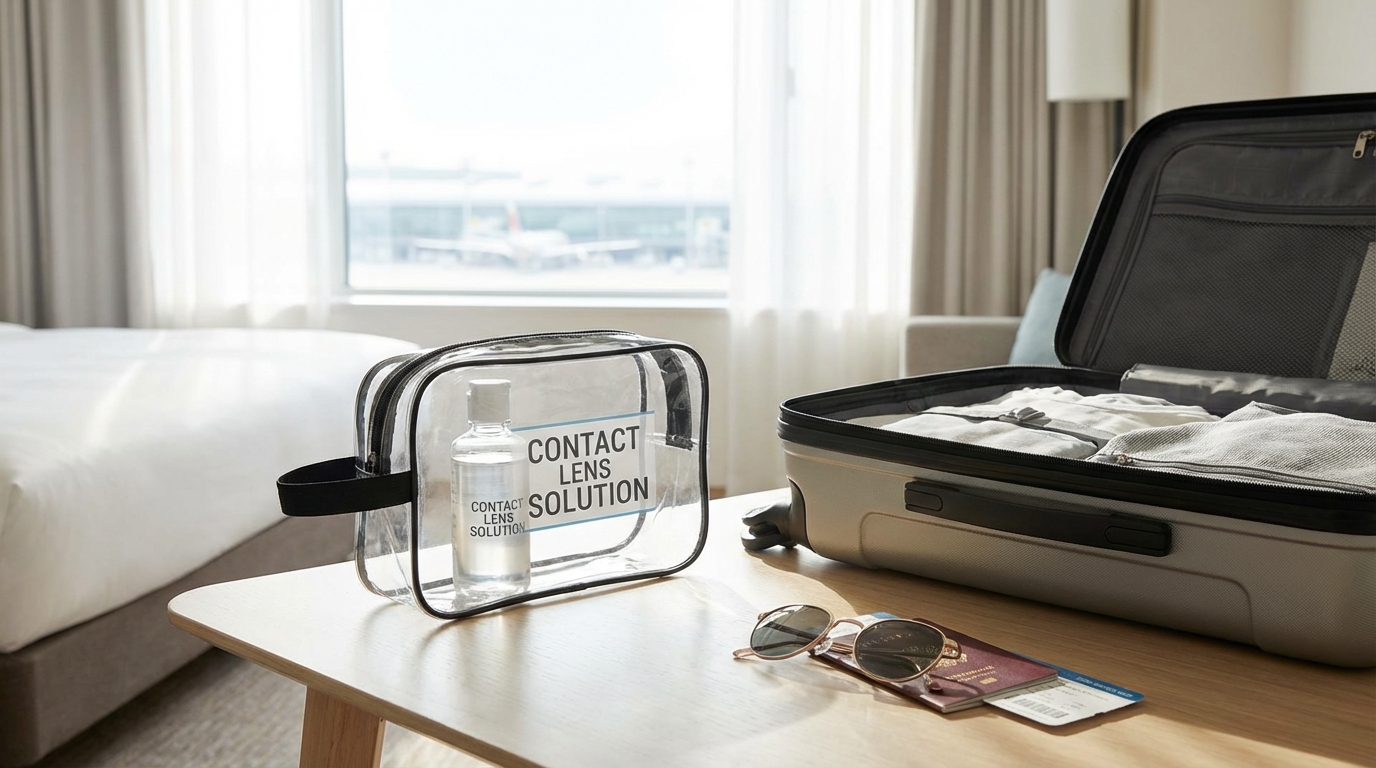
Yes, you can bring contact lens solution on a plane. Travel-sized bottles (3.4 oz or less) go in your quart-sized liquids bag. Larger bottles may be allowed as medically necessary liquids if you declare them at the checkpoint.
Yes, you can bring contact lens solution on a plane. The simplest approach: grab a travel-sized bottle (3.4 oz / 100 ml or less), toss it in your quart-sized liquids bag, and you're done. No questions, no hassle, no special declarations needed.
But if you need more than 3.4 ounces -- and let's be honest, most full-size bottles of solution are 10-12 ounces -- the rules get a little more nuanced. Here's everything you need to know.
The Standard Rule: 3-1-1 Applies
Contact lens solution is a liquid. That means it follows the TSA's 3-1-1 rule in carry-on bags:
- 3.4 ounces (100 ml) maximum per container
- 1 quart-sized clear, resealable bag
- 1 bag per passenger
Most drug stores and optical shops sell travel-sized contact lens solution in 2-ounce or 3-ounce bottles specifically designed for air travel. These fit the 3-1-1 rule perfectly and are the easiest option.
The key thing to remember: the limit is on the container size, not the amount of liquid inside. A half-empty 12-ounce bottle won't pass -- the container itself is too big. You need to transfer solution to a smaller container or buy a travel size.
The Medical Exception: Larger Quantities
Here's where contact lens wearers get a break. The TSA classifies contact lens solution as a medically necessary liquid. Medically necessary liquids are exempt from the 3-1-1 rule and can be brought in "reasonable quantities" exceeding 3.4 ounces.
To use this exception:
- Declare the solution to the TSA officer at the beginning of the screening process -- before your bag goes on the belt
- Separate it from your other liquids. Don't bury it inside your quart-sized bag. Have it accessible for inspection.
- Expect additional screening. The TSA officer may open the bottle, test it with a test strip, or swab the outside for traces of explosives. This takes an extra minute or two.
The phrase "reasonable quantities" is intentionally flexible. A 12-ounce bottle for a week-long trip? Totally reasonable. A case of six bottles? You'll get questions, and the officer has discretion to deny it.
The Catch: Chemical Screening
Here's something most articles won't tell you: some contact lens solutions contain chemicals that can trigger the TSA's explosive trace detection equipment. Hydrogen peroxide-based solutions (like Clear Care or AO Sept) are particularly prone to this.
If your solution triggers an alarm during additional screening, the TSA officer may not allow it through the checkpoint -- even if it's a medically necessary liquid. This isn't common, but it does happen.
What to do if this happens:
- Stay calm. The officer is following protocol.
- Explain that it's hydrogen peroxide-based contact lens solution
- Ask to speak with a supervisor if the initial officer won't let it through
- Have a backup plan (see the next section)
If you use a peroxide-based solution, consider bringing a standard multi-purpose solution for travel and switching to your preferred solution at your destination.
The Smart Strategy: Pack It in Checked Bags
The 3-1-1 rule doesn't apply to checked luggage. There are no liquid restrictions in checked bags. This means you can pack a full-size bottle (or multiple bottles) of contact lens solution in your checked suitcase without any issues.
Here's the strategy experienced contact lens wearers use:
- Checked bag: Full-size bottle of your preferred solution. Seal it in a zip-lock bag to prevent leaks -- pressure changes during flight can pop lids.
- Carry-on: Travel-sized bottle (3.4 oz) as backup, in your quart-sized liquids bag.
This way, if your checked bag is delayed or lost, you still have enough solution to get through a day or two. And you don't have to deal with the medical exception declaration at security.
Contact Lenses Themselves: No Liquid Issues
Good news: contact lenses are not considered liquids by the TSA. Whether you're packing daily disposables, weekly lenses, or monthlies in their sealed blister packs, they don't count toward your quart-sized bag and don't follow the 3-1-1 rule.
You can bring as many spare contacts as you want in carry-on or checked bags. In fact, you should always bring extras when traveling. Losing or tearing a lens on a trip with no backup is miserable.
Contact lens cases (the little round storage cases) also don't count as liquids, even though they contain a small amount of solution. They're too small to be a concern.
Eye Drops and Rewetting Drops
Contact lens rewetting drops and artificial tears follow the same rules as solution:
- Under 3.4 oz: Put them in your quart-sized liquids bag, no declaration needed
- Over 3.4 oz: Declare as medically necessary, expect additional screening
- Checked bags: No restrictions at all
Most eye drop bottles are well under 3.4 ounces, so this usually isn't an issue. The small bottles fit easily in the liquids bag alongside your other travel-sized toiletries.
Flying tends to dry out your eyes faster than normal because cabin air has extremely low humidity -- typically around 10-20%, compared to the 30-60% you're used to on the ground. Bring rewetting drops in your carry-on and use them during the flight. Your eyes will thank you.
International Flights: Same Rules Apply
The 3-1-1 liquid rule is essentially universal. The International Civil Aviation Organization (ICAO) set the standard, and virtually every country follows it. So whether you're flying domestically or heading to Europe, Asia, or anywhere else, the same 3.4-ounce carry-on limit applies.
One exception: some airports with advanced screening technology have relaxed the liquid rules for departing flights, allowing larger containers. A few European airports are testing this. But don't count on it -- the standard 3-1-1 rule is still the norm at most airports worldwide.
Tips for Contact Lens Wearers on Flights
Beyond the TSA rules, here's practical advice for flying with contacts:
- Wear glasses to the airport. If you have the option, wear glasses for the flight. The dry cabin air is tough on contacts, especially for flights over three hours. Switch to contacts at your destination.
- Bring a lens case in your personal item. If your contacts start bothering you mid-flight, you can take them out.
- Pack extra daily disposables. If you wear dailies, bring a few extra pairs in your carry-on. They take up almost no space and eliminate the need for solution during travel.
- Stay hydrated. Drinking water helps combat the overall dehydration that makes dry eyes worse during flights.
- Don't sleep in your contacts. This applies always, but especially on red-eye flights. The combination of dry cabin air and sleeping is a recipe for irritated eyes.
What to Do If You Forget Your Solution
It happens. You're at the airport, you realize your solution is in your checked bag, and you're wearing contacts. Here are your options:
- Airport shops: Many airport convenience stores and pharmacies carry travel-sized contact lens solution. It'll cost more than at a drugstore, but it's available.
- Saline solution: In a pinch, sterile saline can rinse your lenses. It won't disinfect them, but it'll work for temporary storage.
- Switch to glasses: If you brought them, this is the simplest solution.
- Buy at your destination: Contact lens solution is available at pharmacies worldwide. If you can make it to your destination with your current lenses, pick some up when you land.
The Bottom Line
Travel-sized contact lens solution (3.4 oz or less) goes in your quart-sized liquids bag with no issues. Larger bottles can technically come through as medically necessary liquids if you declare them, but the easiest approach is to put full-size bottles in your checked bag and carry a small one as backup. Bring extra contacts, rewetting drops, and consider wearing glasses for the flight. Your eyes deal with enough on a plane without adding TSA stress to the mix.
Frequently Asked Questions
Can I bring a full-size bottle of contact solution in my carry-on?
Technically yes, as a medically necessary liquid. You must declare it to the TSA officer before screening and expect additional testing. The easier approach is to pack the full-size bottle in checked luggage and carry a travel-sized backup.
Do contact lenses count as a liquid for TSA?
No. Contact lenses in sealed blister packs or in a lens case are not considered liquids. You can pack as many spare contacts as you want in carry-on without putting them in your quart-sized bag.
Can TSA reject my contact lens solution even if it's medically necessary?
Yes. If the solution triggers the explosive trace detection equipment during additional screening, the officer may not allow it through. Hydrogen peroxide-based solutions are more likely to trigger alarms.
How much contact lens solution can I bring on a plane?
In carry-on under the standard 3-1-1 rule, containers must be 3.4 ounces or less. As a medically necessary liquid, you can bring larger amounts in 'reasonable quantities' with declaration. In checked bags, there's no limit.
Should I wear contacts or glasses on a plane?
Glasses are generally more comfortable for flying. Cabin air has very low humidity (10-20%), which dries out contact lenses quickly, especially on longer flights. If you wear contacts, bring rewetting drops and stay hydrated.
Written by Aviation Experts
Aviation Professionals
With decades of combined experience in the aviation industry, our team shares insider knowledge to make your travel experience smoother and less stressful.
Was this article helpful?