Can You Bring a Breast Pump on a Plane?
Quick Answer
Breast pumps are allowed on planes in carry-on and checked bags, and most airlines don't count them toward your carry-on limit. Here's everything you need to know about flying with a breast pump and breast milk.
The Short Answer
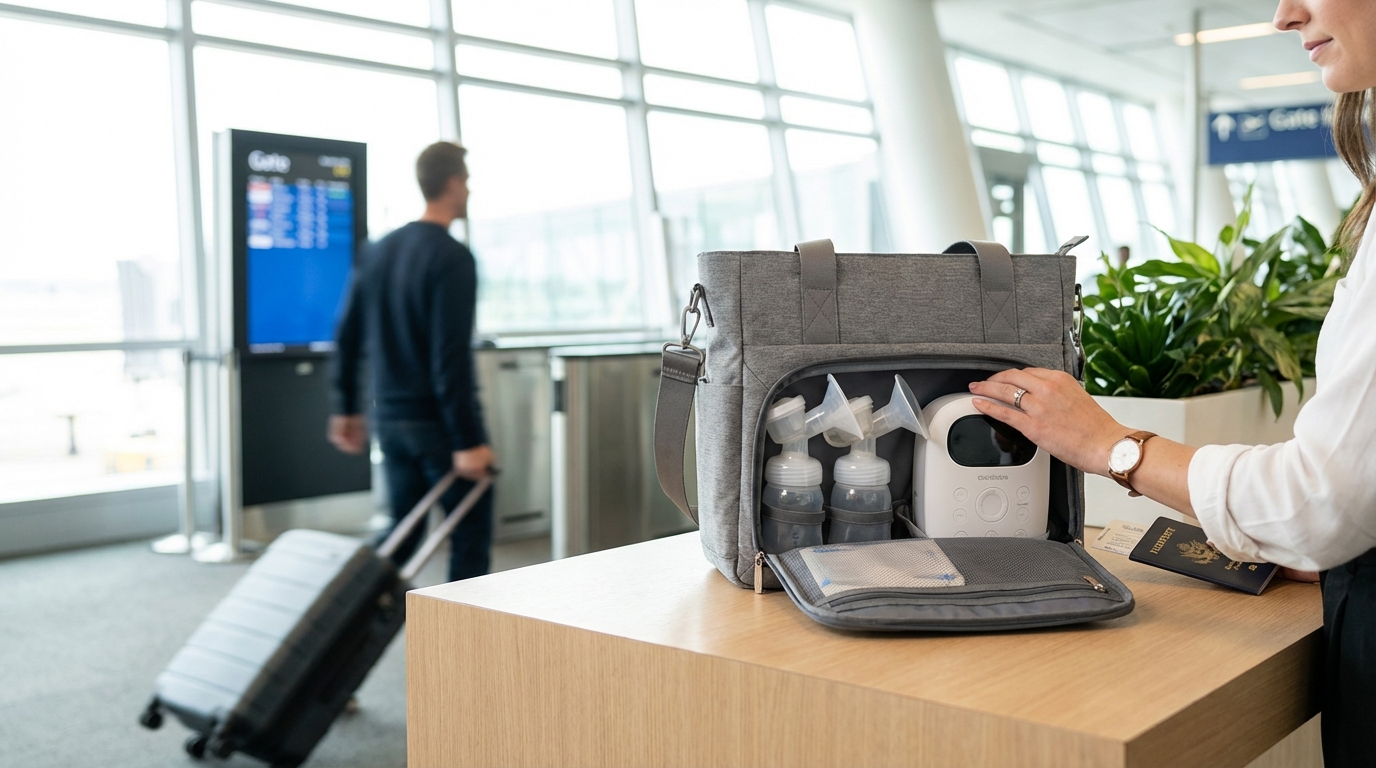
Yes, you can absolutely bring a breast pump on a plane. TSA allows breast pumps in both carry-on and checked bags. And here's the best part: most airlines classify breast pumps as medical devices, which means they don't count toward your carry-on bag limit. You can bring your pump in its own bag in addition to your regular carry-on and personal item.
TSA Rules for Breast Pumps
TSA's policy is clear and supportive. Breast pumps are allowed through the security checkpoint without any restrictions. You don't need to remove the pump from your bag for screening, and there's no special documentation required.
The pump will go through the X-ray machine like any other item. If a TSA officer wants to take a closer look, they'll do a visual inspection — but this is uncommon.
Breast Pumps Don't Count as a Carry-On
This is the rule that trips people up, so let's be clear: a breast pump is considered a medical device by most major airlines. That means you can bring it as an additional item beyond your carry-on and personal item.
Here's what the major carriers say:
- American Airlines: Breast pumps and small cooler bags for breast milk are allowed as additional items beyond your carry-on allowance
- Delta Air Lines: Breast pumps are classified as medical equipment and permitted in addition to standard carry-on items
- Southwest Airlines: Breast pumps and milk bags are considered medical devices and don't count against carry-on limits
- United Airlines: Breast pumps are treated as medical devices and don't count toward carry-on limits
- JetBlue: Allows breast pumps as an additional medical item
If you're flying a smaller or budget carrier, check their specific policy before your trip. The rule isn't universal, but it's standard across all major U.S. airlines.
Flying with Breast Milk
Here's where the rules get really parent-friendly. Breast milk is exempt from the TSA's 3-1-1 liquids rule.
What's Allowed
- Breast milk in any reasonable quantity — there's no specific limit
- You don't need to be traveling with your baby
- Formula and toddler drinks also qualify for the exemption
- Breast milk doesn't need to fit in a quart-sized bag
Ice Packs and Coolers
You can bring ice packs, gel packs, freezer packs, and insulated cooler bags to keep breast milk cold. These are allowed even if they're partially melted or slushy. TSA won't make you dump them.
This is a big deal for pumping parents. You don't need to worry about your ice packs melting during a long security line.
At the Security Checkpoint
When you reach the front of the line, tell the TSA officer that you have breast milk before your bags go through the X-ray. Remove the milk from your bag and place it in a separate bin for screening.
TSA may need to do additional screening on the milk. This might include:
- Opening the container for a visual inspection
- Testing a small amount with a test strip
- Running it through additional screening equipment
They should not ask you to taste it, open sealed containers, or dispose of it. If an officer gives you trouble, politely ask for a supervisor. You're protected by TSA policy, and since the passage of the BABES Enhancement Act, TSA officers receive specific training on breast milk screening procedures.
The BABES Enhancement Act
The original Bottles and Breastfeeding Equipment Screening (BABES) Act established that breast milk, formula, and pumping equipment receive special treatment at airport security. The BABES Enhancement Act strengthened these protections by requiring:
- Clearer TSA signage about breast milk rules
- Better officer training on screening procedures
- More consistent screening practices nationwide
- A formal complaint process if your rights aren't respected
In short, the law is on your side. Don't let an uninformed agent tell you otherwise.
Electric vs. Manual Pumps on Planes
Electric Breast Pumps
Electric pumps are fine in carry-on and checked bags. The batteries (whether rechargeable lithium-ion or standard AA) are well within TSA and FAA limits. No issues here.
If you plan to pump during the flight, a battery-powered or wearable pump is your best bet. Not every seat has a power outlet, and asking a flight attendant for pumping accommodations mid-flight is easier if you're self-contained.
Manual Pumps
Manual pumps have zero restrictions. No batteries, no electronics — just a straightforward mechanical device. They're also lighter and more compact for travel.
Pumping on the Plane
There's no rule against pumping on a plane. You're allowed to breastfeed and pump during the flight. Here are some practical tips:
- Book a window seat. This gives you the most privacy and a wall to lean against.
- Bring a nursing cover. Even if you're comfortable pumping openly, a cover reduces attention and questions from seatmates.
- Use a wearable pump if possible. In-bra pumps like Elvie or Willow are discreet and don't require you to set up tubes and bottles.
- Pack extra storage bags. Bring more milk storage bags than you think you'll need. Better to have extras than to run out mid-flight.
- Ask for ice. Flight attendants can provide cups of ice to keep expressed milk cold during the flight.
Packing Checklist for Flying with a Breast Pump
- Breast pump (in its own bag)
- Extra bottles and flanges
- Milk storage bags
- Insulated cooler bag
- Ice packs or gel packs (frozen)
- Cleaning wipes or small bottle brush
- Extra batteries or charging cable
- Nursing cover or scarf
- Ziplock bags for dirty parts
What to Do If You Have Problems at Security
Most TSA officers handle breast pumps and breast milk without issue. But if you run into trouble:
- Stay calm and reference TSA policy. You can pull up the TSA website on your phone.
- Ask for a supervisor. They typically have more training on medical item exceptions.
- File a complaint. You can file directly with TSA after the fact. This helps improve training and accountability.
- Contact your airline. If a gate agent questions your additional bag, explain that it's a medical device. Airline policy supports you.
Airport Nursing and Pumping Rooms
Many major airports now have dedicated lactation rooms or nursing stations. These are private spaces with outlets, seating, and sometimes a sink — far more comfortable than pumping in a bathroom stall or at your gate.
Airports with well-known lactation facilities include:
- San Francisco (SFO): Multiple lactation rooms across terminals
- Dallas/Fort Worth (DFW): Nursing suites in each terminal
- Denver (DEN): Mamava pods throughout the airport
- Atlanta (ATL): Lactation rooms in the domestic terminal
- JFK and LaGuardia: Nursing rooms available post-security
If your airport doesn't have a dedicated room, ask at the airline's customer service desk. They can sometimes provide access to a private area. Federal law requires airports that undergo major renovations to include lactation spaces, so availability is steadily improving.
International Travel with a Breast Pump
TSA rules apply at U.S. airports, but international security agencies have their own policies. The good news is that most countries treat breast pumps and breast milk similarly to the U.S. — pumps are allowed, and milk gets a liquid exemption.
A few things to keep in mind for international trips:
- Voltage differences: If you have an electric pump, check whether it supports dual voltage (110V/220V). Most modern pumps do, but older models might not. You'll need a plug adapter at minimum, and possibly a voltage converter.
- Labeling: In some countries, having breast milk clearly labeled can speed up security screening. A simple sticker or note on the container helps.
- Customs: Breast milk is generally not subject to food import restrictions, but having a reasonable quantity (what you'd use during travel, not gallons) avoids questions.
Cleaning Your Pump During Travel
Keeping pump parts clean between uses while traveling takes some planning. Here's what works:
- Medela Quick Clean wipes or similar sanitizing wipes let you clean parts without access to water
- Microwave steam bags work if your hotel has a microwave
- The refrigerator hack: Between pumping sessions, store pump parts in a clean ziplock bag in the hotel fridge. The cold temperature slows bacterial growth. Wash thoroughly before the next day's first use.
- Pack backup parts: Extra flanges, valves, and membranes weigh almost nothing and save you if a part breaks or gets lost
Frequently Asked Questions
Frequently Asked Questions
Does a breast pump count as a carry-on bag?
No. Most major airlines classify breast pumps as medical devices, which means they're allowed as an additional item beyond your carry-on and personal item.
Is breast milk subject to the 3-1-1 liquids rule?
No. Breast milk, formula, and toddler drinks are exempt from the 3-1-1 rule. You can bring any reasonable quantity in your carry-on without fitting it in a quart-sized bag.
Can you bring breast milk on a plane without your baby?
Yes. TSA allows breast milk in carry-on bags regardless of whether your child is traveling with you.
Do ice packs for breast milk need to be frozen solid?
No. TSA allows ice packs, gel packs, and freezer packs that are partially melted or slushy. They don't need to be completely frozen to pass through security.
Can you pump breast milk during a flight?
Yes. There's no rule against pumping on a plane. A window seat offers the most privacy, and wearable pumps like Elvie or Willow are the most discreet option for in-flight pumping.
Written by Aviation Experts
Aviation Professionals
With decades of combined experience in the aviation industry, our team shares insider knowledge to make your travel experience smoother and less stressful.
Was this article helpful?