Can You Bring Snacks on a Plane?
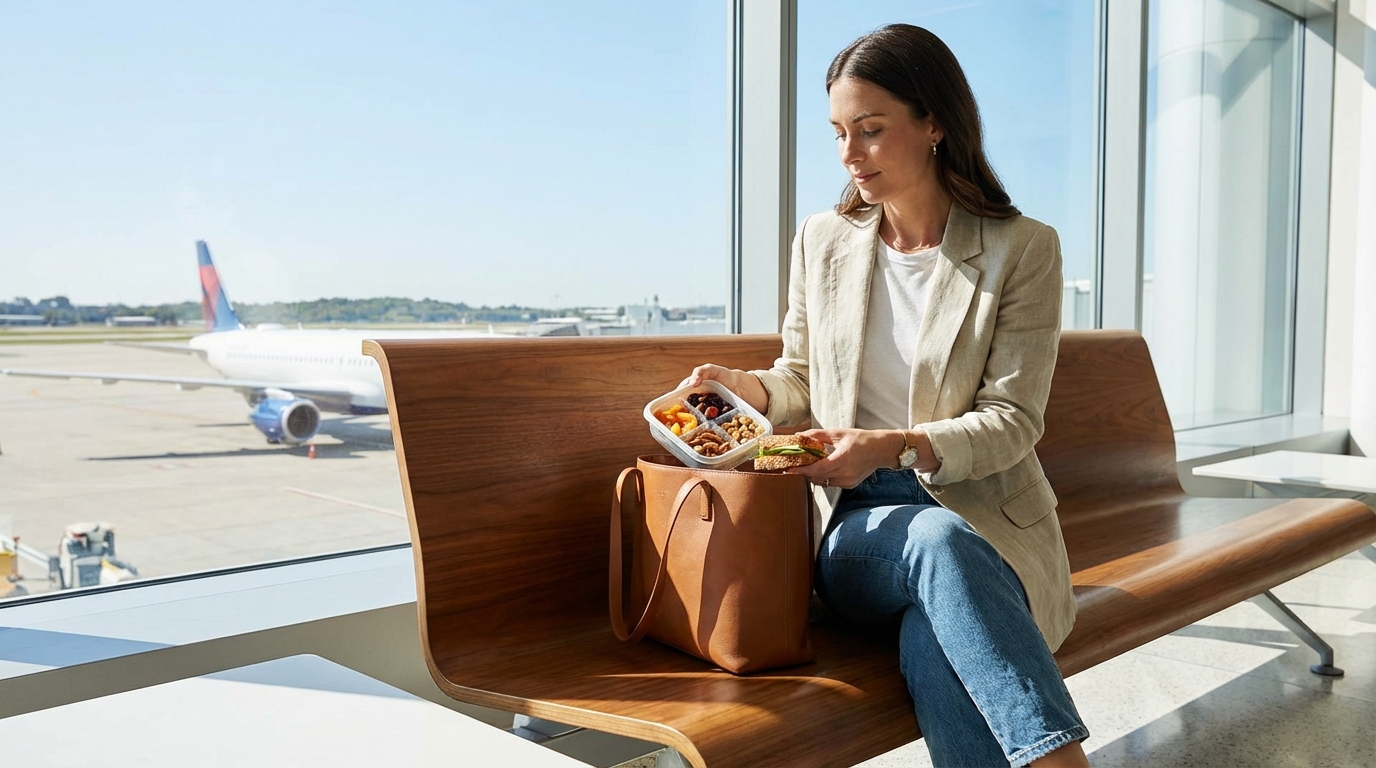
Quick Answer
Yes, you can bring snacks on a plane. Solid snacks like granola bars, chips, sandwiches, fruit, and nuts are all allowed in carry-on bags with no restrictions. Spreadable or liquid foods like hummus, yogurt, and peanut butter fall under the 3-1-1 liquids rule.
The Quick Answer
Yes, you can bring snacks on a plane. TSA is very clear on this: solid food is allowed in both carry-on and checked bags. You can pack a sandwich, a bag of chips, a container of nuts, or even a full meal.
The only snacks that cause problems are the ones TSA classifies as liquids — think hummus, yogurt, and peanut butter. Those fall under the 3-1-1 rule. Everything else? Bring it on board.
Solid Snacks: No Restrictions
If it's solid, you can pack it. TSA allows all solid food items through security in your carry-on. No size limit, no quantity limit, no special packaging required.
Here's what flies without any issues:
- Granola bars and protein bars
- Chips, crackers, and pretzels
- Nuts and trail mix
- Cookies and baked goods
- Sandwiches and wraps
- Fruit (apples, bananas, oranges, grapes)
- Vegetables (carrots, celery, bell pepper slices)
- Candy and chocolate
- Beef jerky and dried fruit
- Bread, bagels, and muffins
- Pizza (yes, really)
- Cooked meat and hard-boiled eggs
- Cheese (hard and firm cheeses)
You can bring as much solid food as you can fit in your bags. There's no TSA regulation limiting the quantity. If you want to pack an entire carry-on full of snacks, you technically can — though your seatmates might give you looks.
Spreadable and Liquid Snacks: 3-1-1 Rule Applies
Here's where it gets tricky. TSA defines a "liquid" as anything that can be poured, pumped, squeezed, spread, smeared, or sprayed. That covers a lot of foods you might not think of as liquids.
These snacks must follow the 3-1-1 rule (3.4 oz containers, 1 quart bag, 1 per passenger):
- Hummus
- Peanut butter and other nut butters
- Yogurt
- Jelly and jam
- Cream cheese and soft cheeses
- Salsa and guacamole
- Dips (ranch, tzatziki, queso)
- Honey and maple syrup
- Soup and broth
- Pudding and applesauce
- Salad dressing
If it can spread on bread, it's probably a liquid in TSA's eyes. The 3.4-ounce limit means you're looking at maybe two tablespoons of hummus or peanut butter. Not exactly a satisfying snack.
The Workaround
Want more than 3.4 ounces of hummus? Buy it after security. Most airport shops, restaurants, and food courts sell snacks past the checkpoint. Prices are higher, but you can get a full-sized container without the liquid restriction.
Alternatively, pack your spreadable snacks in checked luggage where there's no liquid size limit.
Baby Food and Formula: An Exception
If you're flying with an infant or toddler, TSA allows larger quantities of baby food, formula, breast milk, and juice. These are exempt from the 3-1-1 rule.
You can bring "reasonable quantities" for the flight — there's no hard limit, but bring what you'll actually need. Declare these items to the TSA officer at the checkpoint. They may undergo additional screening (visual inspection, X-ray, or testing strips), but they won't be confiscated for being over 3.4 ounces.
This exemption applies whether or not the child is present, so a parent flying to meet their baby can still carry formula.
Frozen Snacks and Ice Packs
Frozen food is allowed through TSA security — but only if it's completely frozen solid at the time of screening. A frozen solid item is treated as a solid, not a liquid.
Here's the catch: if your frozen item has partially thawed and there's any visible liquid, it falls under the 3-1-1 rule. A smoothie that was frozen at home but melted in your car on the way to the airport? That's a liquid now.
Ice packs follow the same logic:
- Fully frozen ice packs: Allowed through security
- Partially melted ice packs: Subject to the 3-1-1 rule, which means 3.4 oz max
If you're packing perishable snacks in a cooler bag, freeze your ice packs rock-solid and plan to hit security quickly. Or use gel-free alternatives like frozen water bottles (fully frozen = allowed) or reusable ice cubes.
Snacks You Buy After Security
Anything you purchase past the TSA checkpoint is fair game. No size restrictions, no liquid concerns. Buy a giant smoothie, a full container of yogurt, a big bottle of water — it all goes on the plane with you.
This is the easiest strategy for liquid or spreadable snacks. Skip the hassle of trying to squeeze hummus into a 3.4-ounce container and just buy it inside the terminal.
Best Snacks for Flying
Not all snacks are created equal for air travel. Here's what works best:
- Protein bars: Compact, no mess, don't need refrigeration. Kind, RXBar, and Clif are all solid options.
- Trail mix and nuts: Calorie-dense, portable, no prep needed. Avoid overly salty mixes — you'll be dehydrated enough on the plane.
- Fruit: Apples and bananas travel well. Berries are riskier — they can get crushed.
- Sandwiches: Make one at home and save $15 over airport prices. PB&J, turkey and cheese, or a simple veggie wrap all hold up well.
- Cheese and crackers: Hard cheeses (cheddar, gouda) are fine at room temperature for several hours. Pair with crackers for a satisfying combo.
- Beef jerky: High protein, lightweight, and lasts forever. Just don't pick the strongest-smelling flavor — your seatmate is three inches away.
Snacks to Avoid on a Plane
- Anything with a strong smell. Tuna, hard-boiled eggs (the sulfur smell intensifies at altitude), and durian are technically allowed but socially questionable.
- Messy foods. Saucy items, soups, and anything that requires a full setup. You have a tray table the size of a notebook.
- Excessive crumbs. Dry cereal and crumbly cookies create a mess in the cramped seat area.
International Flight Considerations
TSA rules apply to flights departing from US airports, but international travel adds customs restrictions at your destination.
Many countries restrict importing fresh produce, meat, and dairy products — even small amounts in your carry-on snack bag:
- Australia and New Zealand: Extremely strict. Fresh fruit, vegetables, meat, and even some packaged snacks can be confiscated with fines up to thousands of dollars.
- EU countries: Restrictions on meat, dairy, and plant products from non-EU countries.
- Canada: Limits on fresh produce and meat. Packaged, shelf-stable snacks are generally fine.
- Japan: Strict on meat products, including jerky and sausage.
For international flights, stick to packaged, shelf-stable snacks like granola bars, chips, and candy. Eat your fresh fruit and sandwiches during the flight rather than trying to bring them through customs.
How Much Food Can You Bring?
There's no TSA-imposed weight or quantity limit on solid food. You could theoretically fill your entire carry-on with sandwiches and granola bars and TSA wouldn't blink. The only limits are your bag's size and weight restrictions set by your airline.
That said, bringing an excessive amount of food can draw attention during screening. If your bag is packed solid with food items and the X-ray operator can't see through it clearly, they'll pull it for a manual check. This isn't because the food is prohibited — it's because dense items obscure the X-ray image and TSA needs to verify nothing suspicious is hiding underneath.
Keep it reasonable. Enough snacks for your flight and maybe a meal at your destination is plenty. You're not stocking a fallout shelter.
Eating at the Gate vs. On the Plane
You can eat your snacks at any point during your airport experience — at the gate, on the jetway, or in your seat. Airlines don't restrict passengers from eating food they brought from home, though some flight attendants may give side-eye to particularly aromatic meals.
On short domestic flights where no food service is offered, bringing your own snacks is practically expected. On longer flights with meal service, your homemade sandwich is still welcome — just be mindful of space at your seat.
One exception: some international airlines and premium cabins have stricter policies about outside food. First-class passengers on international carriers may be asked to save their own food for after the meal service. This is about cabin decorum, not TSA rules.
Allergies and Dietary Restrictions
Bringing your own snacks is especially important if you have food allergies or dietary restrictions. Airline snack options are limited, and airport food can be expensive and hard to navigate for specific diets.
If you have a severe nut allergy, be aware that many airlines still serve peanuts or tree nuts. Bringing your own safe snacks is the best defense. Some airlines will make an announcement asking passengers not to open nut products if you notify them in advance, but this isn't guaranteed.
For keto, vegan, gluten-free, or other specific diets, packing your own snacks is almost always easier than relying on what's available at the airport or on the plane.
Frequently Asked Questions
Can I bring a sandwich through TSA?
Yes. Sandwiches are solid food and are allowed through TSA security in your carry-on with no restrictions. You can bring homemade or store-bought sandwiches of any size.
Why is peanut butter considered a liquid by TSA?
TSA classifies anything that can be spread, poured, pumped, or squeezed as a liquid. Peanut butter is spreadable, so it falls under the 3-1-1 liquids rule. In your carry-on, peanut butter containers must be 3.4 ounces or less.
Can I bring snacks on an international flight?
You can bring snacks through TSA for an international flight, but many countries restrict importing fresh produce, meat, and dairy at customs. Stick to packaged, shelf-stable snacks and eat fresh items during the flight before landing.
Is there a limit on how much food I can bring on a plane?
TSA doesn't set a quantity limit on solid food in carry-on bags. You can bring as much as you can fit in your luggage. Liquid and spreadable foods are limited to 3.4-ounce containers in your quart-sized bag.
Can I bring a frozen smoothie through TSA?
Only if it's completely frozen solid at the time of screening. If there's any visible liquid or partial thawing, TSA treats it as a liquid subject to the 3.4-ounce limit. Freeze it rock-solid and go through security quickly.
Written by Aviation Experts
Aviation Professionals
With decades of combined experience in the aviation industry, our team shares insider knowledge to make your travel experience smoother and less stressful.
Was this article helpful?