What Does the Oxygen Mask Safety Demo Mean?
Quick Answer
Oxygen masks drop when cabin pressure drops suddenly at altitude. The safety demo teaches you to put your own mask on before helping others — because you have about 15 seconds of useful consciousness without oxygen at altitude.
Answer Snapshot
What matters before you fly
This page is structured for fast scanning, direct answers, and source-first verification.
Updated
Mar 19, 2026
Read Time
3 min read
Topic
First Time Flyers
Need To Know
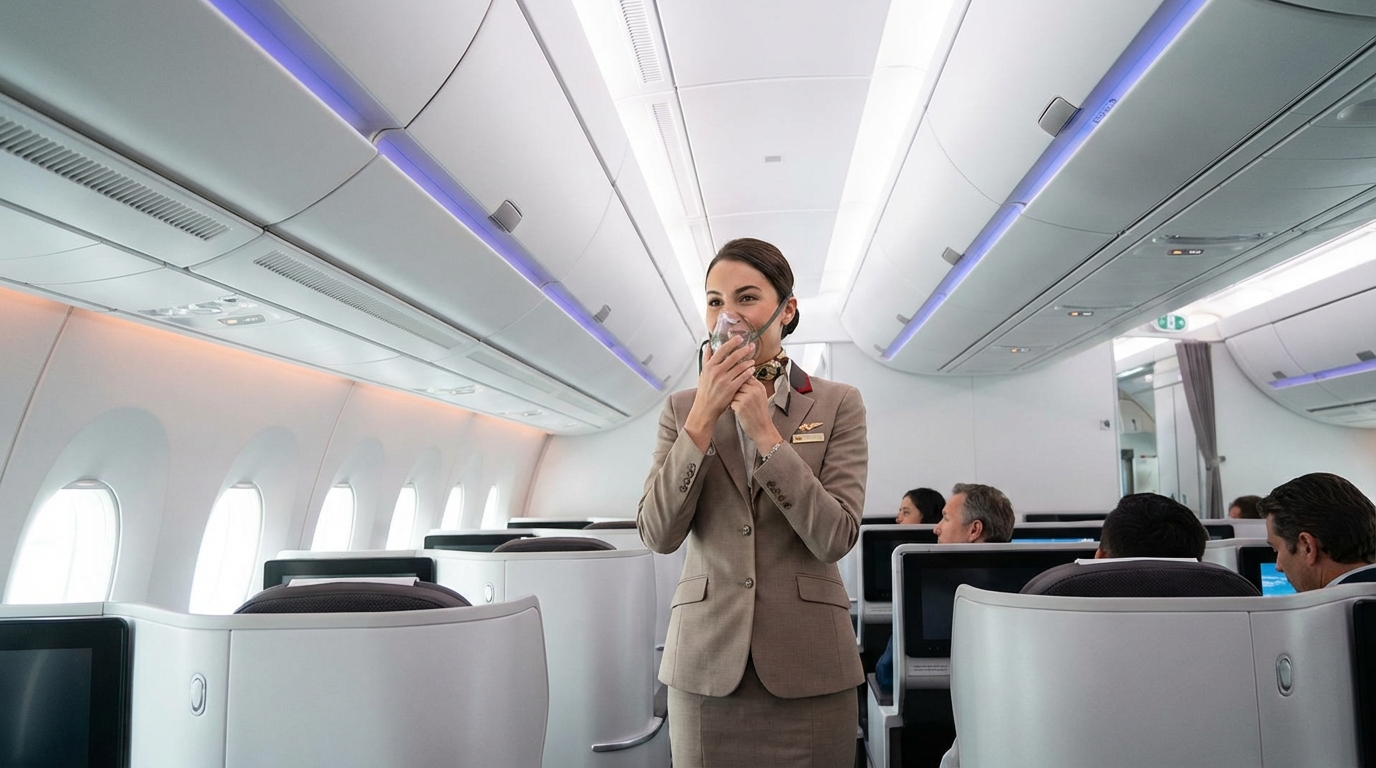
- Pull the mask toward you — the tubing will stretch from the overhead panel to your face
- Place it over your nose and mouth — cover both completely
- Pull the elastic bands over your head to secure it
- Pull the tab to tighten the band
Buying Guides
Best Next Buying Guides For This Topic
These money pages are the most relevant commercial follow-ups for readers who want a practical next step.
3 picks
Best Travel Pillows for Long Flights in 2026
The best travel pillows for long flights support your neck without letting your head fall forward. The Cabeau Evolution S3 is the top pick for memory foam comfort, while the Trtl is the most compact option.
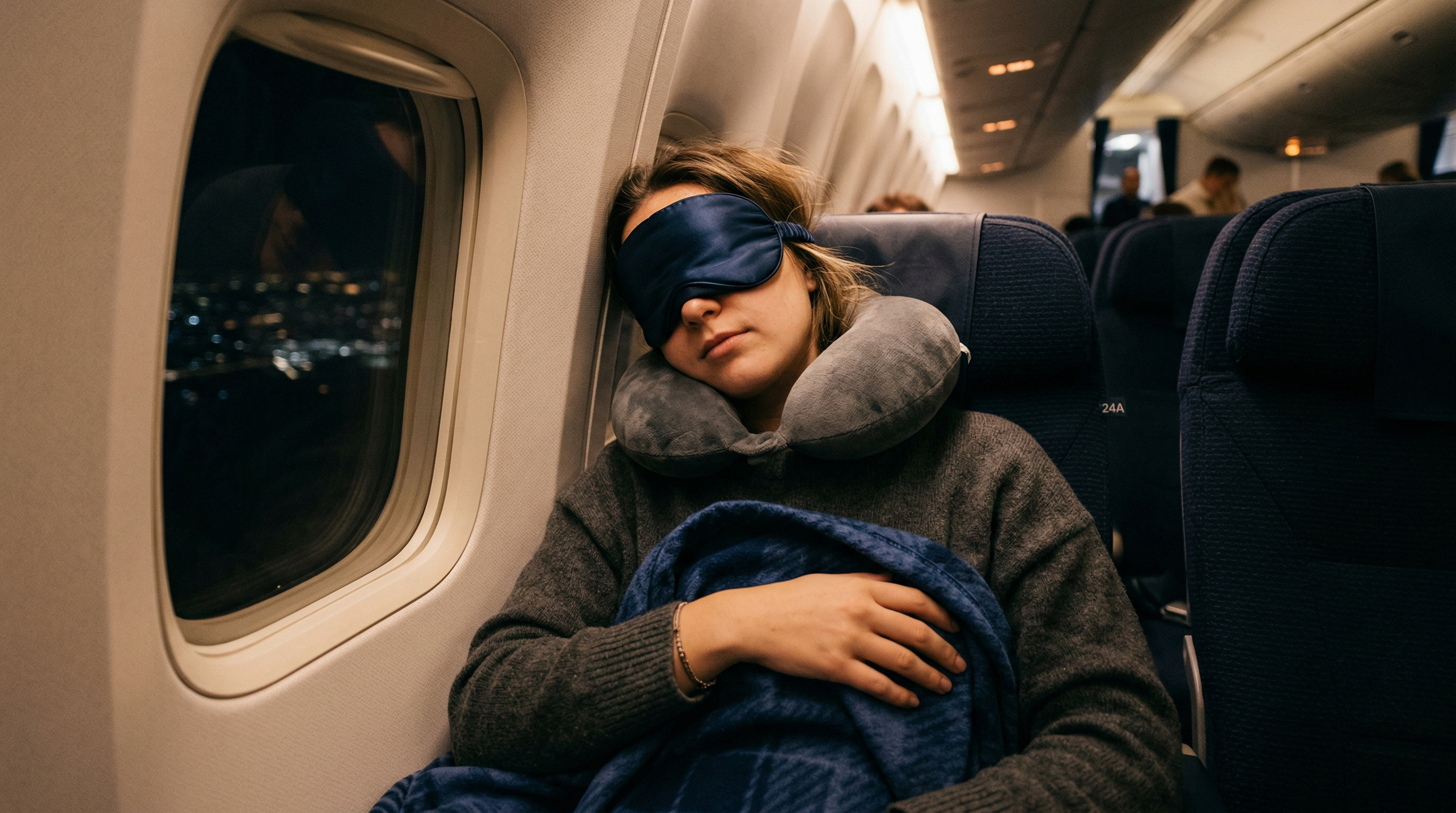
3 picks
Best Neck Pillows for Long Flights
Sleeping on a plane without a neck pillow means waking up with your head on a stranger's shoulder. Here are the best travel pillows that actually prevent the dreaded neck wobble.
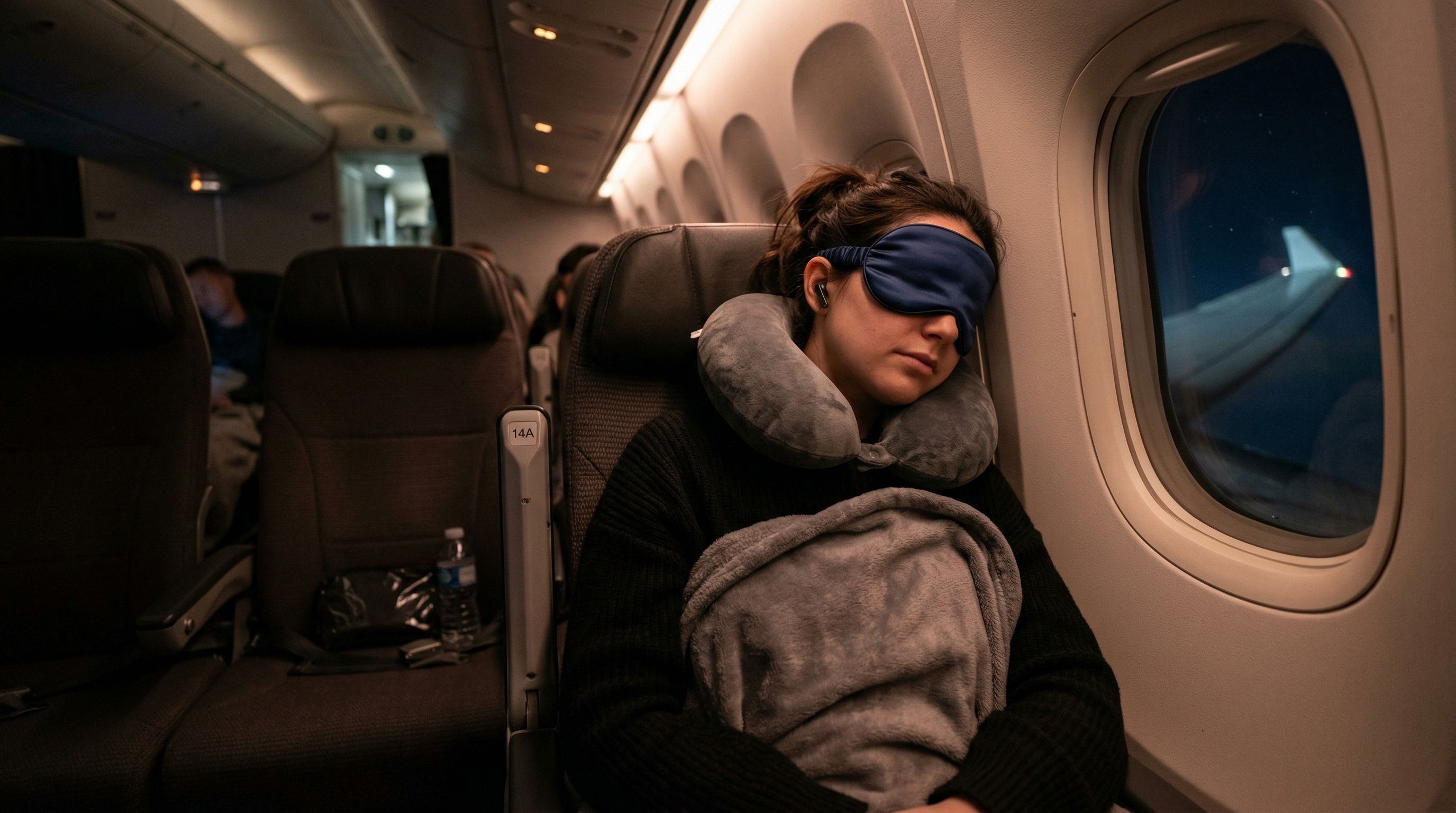
3 picks
Best Sleep Masks for Flying in 2026
The best sleep masks for flying are contoured with deep eye cups so they don't press against your eyelids, and block 100% of light. Alaska Bear silk masks and Manta contoured masks are the top picks.
3 picks
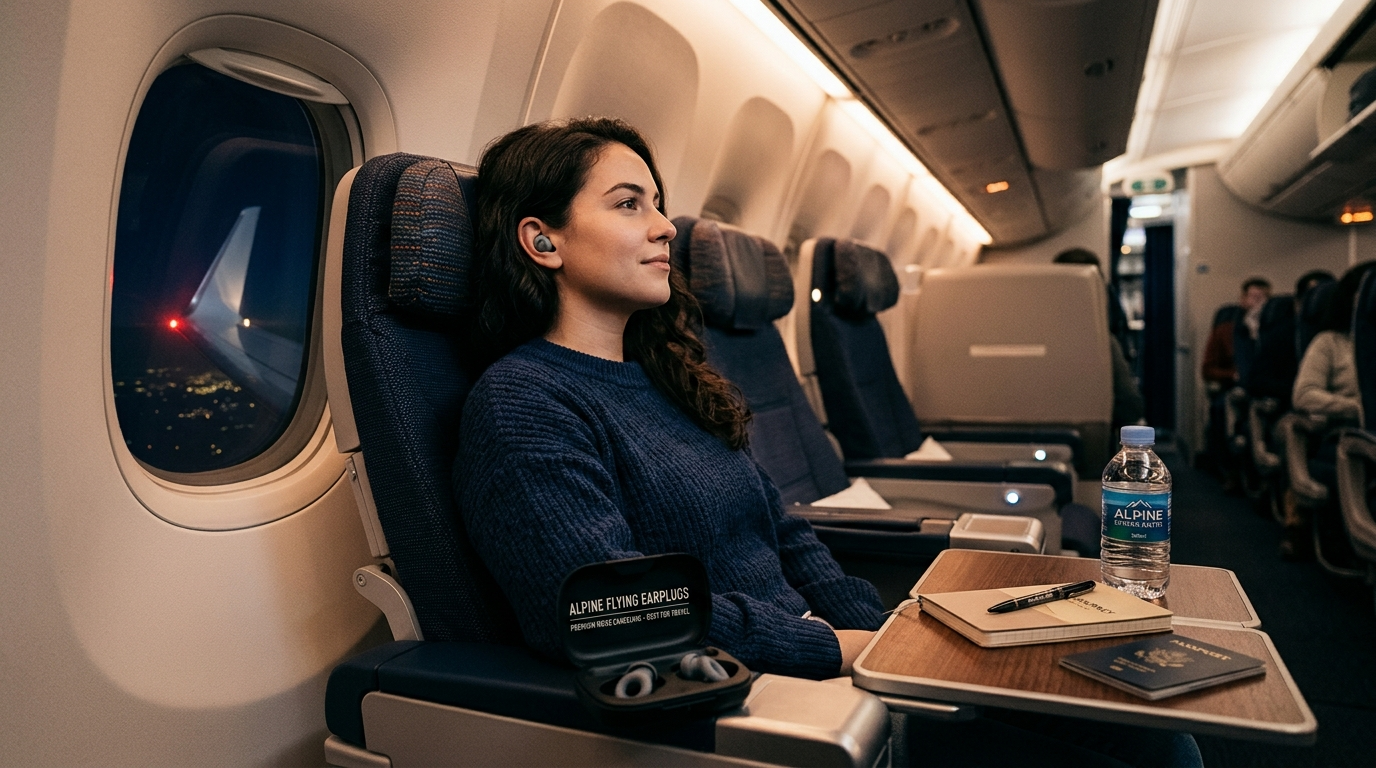
Best Earplugs for Flying
Between engine roar, crying babies, and ear-popping pressure changes, your ears take a beating on flights. Here are the best earplugs that tackle noise AND pressure.
Start Here
First-Flight Picks That Make Everything Easier
Simple, practical travel gear for readers who want their first trip to feel organized from the start.

Cabeau Evolution S3 Travel Pillow
Best-rated memory foam travel pillow with seat straps to prevent head fall. Compressible, machine-washable cover.
Offer
$39.99

Trtl Travel Pillow - Super Soft Neck Support
Compact fleece pillow with internal support structure. Half the size of U-shaped pillows. Great for frequent travelers.
Offer
$29.99

Therm-a-Rest Compressible Travel Pillow
Rolls down tiny for packing. More comfortable than airline pillows. Great for window-seat side sleepers.
Offer
$34.95
Disclosure: Some links in this section are commercial links. We may earn from qualifying purchases or signups at no added cost to you.
Prices and availability can change.
Compare The Offers
A faster way to see which option fits your trip and price point.
Cabeau Evolution S3 Travel Pillow
Best-rated memory foam travel pillow with seat straps to prevent head fall. Compressible, machine-washable cover.
Most travelers
Amazon · Amazon
Pulled from Best Travel Pillows for Long Flights in 2026
Trtl Travel Pillow - Super Soft Neck Support
Compact fleece pillow with internal support structure. Half the size of U-shaped pillows. Great for frequent travelers.
Value-minded travelers
Amazon · Amazon
Pulled from Best Travel Pillows for Long Flights in 2026
Therm-a-Rest Compressible Travel Pillow
Rolls down tiny for packing. More comfortable than airline pillows. Great for window-seat side sleepers.
Specific travel setups
Amazon · Amazon
Pulled from Best Travel Pillows for Long Flights in 2026
Cabeau Evolution S3 Travel Pillow
Best-rated memory foam travel pillow with seat straps to prevent head fall. Compressible, machine-washable cover.
Pulled from Best Travel Pillows for Long Flights in 2026
See on AmazonTrtl Travel Pillow - Super Soft Neck Support
Compact fleece pillow with internal support structure. Half the size of U-shaped pillows. Great for frequent travelers.
Pulled from Best Travel Pillows for Long Flights in 2026
See on AmazonTherm-a-Rest Compressible Travel Pillow
Rolls down tiny for packing. More comfortable than airline pillows. Great for window-seat side sleepers.
Pulled from Best Travel Pillows for Long Flights in 2026
See on AmazonWhat Is the Oxygen Mask Demonstration?
The oxygen mask safety demonstration is the part of the pre-flight safety briefing where flight attendants (or a safety video) show you the yellow oxygen masks that drop from overhead compartments in an emergency. Most passengers tune it out. That's a mistake — the information is genuinely useful and the reasoning behind the instructions is counterintuitive enough to be worth understanding.
When Do Oxygen Masks Deploy?
Oxygen masks in commercial aircraft deploy automatically when the cabin pressure drops below a safe level — typically when the cabin altitude exceeds approximately 14,000 feet. This can happen if there's a failure in the pressurization system, a structural breach in the fuselage, or damage that causes rapid decompression.
At normal cruising altitude (30,000-40,000 feet), the cabin is pressurized to simulate an altitude of about 6,000-8,000 feet. If that pressurization fails and the cabin altitude rises rapidly, there isn't enough oxygen in the air to breathe effectively. The oxygen masks provide supplemental oxygen until the pilots descend to a safer altitude (typically below 10,000 feet) where ambient air has sufficient oxygen.
How Do They Deploy?
When cabin pressure triggers the threshold, overhead compartment panels pop open automatically and the masks drop down. A chemical reaction inside a small canister generates oxygen for approximately 12-15 minutes — enough time for pilots to execute a rapid descent to breathable altitude. The masks don't pull from a large oxygen tank — they're chemically generated, which is why they have a specific and limited duration.
"Put on Your Own Mask Before Helping Others" — Why?
This instruction sounds heartless when you're traveling with children or someone who needs help. But the science behind it is clear:
At high altitude, a rapid decompression event leaves you with only 9-15 seconds of useful consciousness — the window during which you're alert enough to take purposeful action. After that, you become confused and eventually lose consciousness. This window is very short.
If you try to help your child first, you risk running out of useful consciousness before you get your own mask on — leaving both of you without oxygen. If you put on your own mask first (a matter of seconds), you remain conscious and capable of helping your child, other passengers, or yourself through the emergency.
The instruction isn't about prioritizing yourself. It's about remaining capable of helping others.
How to Use the Mask If It Deploys
- Pull the mask toward you — the tubing will stretch from the overhead panel to your face
- Place it over your nose and mouth — cover both completely
- Pull the elastic bands over your head to secure it
- Pull the tab to tighten the band
- Breathe normally — oxygen flow starts when you pull the mask down, which activates the chemical generator
The mask may not inflate visibly even when working correctly. The oxygen is flowing even if the bag looks flat.
How Often Does This Actually Happen?
Rapid decompression requiring oxygen mask deployment is extremely rare on modern commercial aircraft. Cabin pressurization systems are robust and redundant. Pilots train extensively for decompression events. When they do occur, the masks function as designed and pilots descend rapidly to safe altitude. Serious injuries from these events are very uncommon.
Other Parts of the Safety Demo Worth Knowing
The oxygen mask drill is one component of the full pre-flight safety demonstration. Other elements include:
- Seatbelt use: Fasten when seated, keep on during turbulence even when the seatbelt sign is off. Most in-flight injuries happen during unexpected turbulence when passengers are not belted.
- Emergency exits: The demo points out exit locations. The safety card in your seat pocket has a diagram specific to your aircraft. Look at it and note the two nearest exits — one of them might be behind you.
- Brace position: Used in emergency landings to protect your head and reduce impact forces.
- Flotation devices: Location varies by aircraft. Under the seat, in the armrest, or in overhead panels depending on the plane.
Why You Should Actually Pay Attention
Most safety demonstrations happen while passengers are reading, talking, or staring at their phones. Airlines know this. But the 90-second investment is worthwhile because in a genuine emergency — even a non-catastrophic one like unexpected turbulence that knocks people around — the information becomes immediately relevant.
In particular: knowing where the two nearest exits are (and that they may be behind you) takes about five seconds to register during the demo. In a smoke-filled or rapidly degassing cabin, that information has real value.
Frequently Asked Questions
Do the oxygen masks ever actually deploy on commercial flights?
Rapid decompression events that trigger mask deployment are rare on modern commercial aircraft. When they do occur, they typically result from pressurization system issues and are handled by a rapid pilot descent to safe altitude.
Why should I put on my oxygen mask before helping others?
At high altitude, loss of pressurization gives you only 9-15 seconds of useful consciousness. Putting on your mask first ensures you remain alert enough to help others — including your children.
How long does the oxygen in the mask last?
The masks are chemically generated and typically provide 12-15 minutes of oxygen — enough time for pilots to descend to a safe altitude where ambient air has sufficient oxygen.
What if the mask bag doesn't inflate?
The bag may not visibly inflate but oxygen can still be flowing. Breathe normally through the mask. The activation happens when you pull the mask down, starting the chemical reaction.
Official Sources
TSA Travel
Transportation Security Administration · https://www.tsa.gov/travel
General TSA travel guidance, security rules, and screening information.
Aviation Consumer Protection
U.S. Department of Transportation · https://www.transportation.gov/airconsumer
Official DOT consumer resources for delays, refunds, baggage issues, and complaints.
International Travel
U.S. Department of State · https://travel.state.gov/content/travel/en/international-travel.html
Official U.S. international travel hub covering passports, destination info, and travel advisories.
What Can I Bring?
Transportation Security Administration · https://www.tsa.gov/travel/security-screening/whatcanibring/all
The TSA's searchable database for carry-on and checked-bag item rules.
More First Time Flyers Answers
Keep building context with more closely related questions in this topic cluster.
Best Luggage Scales to Avoid Overweight Fees
Overweight baggage fees range from $50 to $200. A $12 luggage scale pays for itself on the first trip. Here are the best portable scales for weighing your bags at home.
Best Luggage Trackers: AirTag vs Tile vs Samsung
Lost luggage is stressful enough without wondering where your bag actually is. Here's how AirTag, Tile, and Samsung SmartTag compare for tracking checked bags through airports.
Best Packing Cubes for Travel
Packing cubes transformed how I travel. Here are the best ones for every budget and packing style, from basic organizers to compression cubes that slash volume by 60%.
Best Portable Chargers for Travel
A dead phone at the airport is a nightmare. Here are the best portable chargers for travel, from compact lipstick-sized options to laptop-charging powerhouses.
Best Travel Backpacks for Flying
The right travel backpack replaces a suitcase, fits in the overhead bin, and doesn't destroy your back. Here are the best ones for every type of traveler and budget.
Do You Have to Remove Your Laptop from Your Bag at TSA?
At standard TSA checkpoints, yes — laptops and large tablets must be removed from your bag and placed in a separate bin. TSA PreCheck members can leave them in their bags.
Disclosure: Some links in this section are commercial links. We may earn from qualifying purchases or signups at no added cost to you.
Air Travel Questions Editorial Team
Researched Against Official Travel Sources
We build guides around official TSA, airline, airport, DOT, and government guidance, then update pages as rules and policies change. Read our editorial policy. Browse our source library.
Was this article helpful?
Get travel tips and deals in your inbox
Join our newsletter for expert travel advice, packing tips, and exclusive deals — delivered weekly.